A beginner signs up on a Tuesday. They come on Thursday, come again the next Tuesday, miss the Thursday, and you never see them again. The automated payment keeps running for another two months, so nothing on your screen tells you anything is wrong. By the time the cancellation arrives you have forgotten their name.
Almost every dojo owner has done this, and almost none of it is a teaching problem. It is a process problem: nobody decided what happens in a new student's first month, so nothing happens.
This guide gives you that process. It covers what to do from the first enquiry to the thirtieth day, what to write down at each step, what to say when a beginner misses a class, and what to stop doing. It is written for a school of 20 to 200 students where the owner is also the instructor. The day-one and day-30 steps take real time on the days they fall; the part that repeats every week takes about ten minutes.
I teach Aikido as a 4th dan Aikikai and ran my own 40-student school before building DojoMaster.
Key Takeaways
- Watch the mat, not the bank statement. A year after joining, 86.6% of new gym members were still paying but only 37.4% were still training twice a week (Gjestvang et al., 2021).
- The losses come later than you think. In the same study, 51.8% were still training regularly at three months and 37.6% at six. The drop is between months three and six, not in week one.
- Chase the first missed class. In a test of 54 different programmes on 61,293 gym members, the single most effective one gave people a small reward for coming back after a missed session (Milkman et al., Nature, 2021).
- A goal-setting form on its own does nothing. Asking someone to write down when they will train had no measurable effect across 13 trials. It only worked when someone came back and reinforced the plan (Silva et al., 2018).
- No martial arts benchmark exists. Any dropout percentage quoted for martial arts specifically has no published study behind it. The closest real research is on fitness clubs and youth sport, and the rest of this guide is from running a dojo.
If you want the wider picture first, this sits inside the complete guide to student retention for martial arts schools.
What Onboarding Means in a Dojo, and Why Nobody Has Numbers for It
Onboarding is everything between a stranger sending you a message and that person becoming someone who just turns up. It covers the enquiry, the trial, the paperwork, the first few weeks on the mat and the conversation at the end of the first month. It is not the sales pitch and it is not the teaching. It is the handful of small administrative and human things in between, which is exactly why they get skipped.
No credible research has been published on how martial arts schools onboard students or how many beginners they lose, so every figure below comes from commercial fitness clubs and youth sport, which have been studied properly. Everything else is from running a dojo, and is marked as such.

Watch the Mat, Not the Bank Statement
The most useful number in the research is the gap between paying and showing up. Norwegian researchers followed 250 people who had joined one of 25 fitness clubs within the previous four weeks, and asked them about their training at three, six and twelve months. A year in, 86.6% still held a membership. Only 37.4% were still training at least twice a week (Gjestvang et al., Frontiers in Psychology, 2021).
That is a gap of 49 points between what the billing report says and what is happening in the room. If your only measure of a new student is whether their payment went through, you will find out they left about three months after they actually left.
The same study shows when the losses actually happen, and it is not where most owners look. At three months, 51.8% were still training twice a week. At six months, 37.6%. At twelve, 37.4%. Almost the entire fall happens between the third month and the sixth, in the stretch after the beginner has stopped being new and before anyone has decided they are a regular.
An older study of 5,240 members of a single gym in Rio de Janeiro found a harsher picture, with 63% stopping before the third month (Sperandei et al., Journal of Science and Medicine in Sport, 2016). One Brazilian gym and one Norwegian chain, measured in different ways, give different sizes for the same problem. Take the direction, not the exact figure: most beginners stop training regularly inside the first three to six months.
What this means for your first 30 days is simple. The job is not only to get them through month one. It is to get them into a routine that will still be there in month four, and to set up a way of noticing when it is not.
The practical measure is attendance against each student's own timetable: the share of the classes they signed up for that they actually came to this month. From running a dojo, my own rule of thumb is that more than 75% is a good student, 50% to 75% is normal, and under 50% usually means they will stop coming soon. Dojo KPIs worth tracking monthly covers how this sits alongside the rest of your numbers, and manual versus automated attendance tracking covers how to record it without it becoming a chore.
Before They Arrive: The Enquiry and the Trial Booking
The onboarding clock starts at the enquiry, not at the sign-up. Most dojos answer an email in two days, send a timetable, and leave the person to work out the rest.
Reply the same day if you can, and in the reply do four things:
- Name a specific class, with a date. Not "classes are Tuesday and Thursday at 7". Say "come this Thursday the 23rd at 7pm, I will be at the door from 6:45".
- Tell them what to wear and bring. Loose clothes, no gi needed yet, bare feet, a bottle of water. Beginners worry about this more than about the training.
- Say what the first class will be like. How long, whether they will be thrown or hit, who else will be there, and that they can stop and watch at any point.
- Ask two short questions. Any injuries or health conditions you should know about, and whether they have trained in anything before. Two questions, not a form.
Collect the rest when they arrive rather than before: full name, date of birth, an emergency contact, and for a child, the parent's details. Ask separately whether you may take photographs that end up on social media, and record the answer, because in Europe that consent has to be freely given, specific and as easy to withdraw as it was to give, rather than buried in a membership form (Regulation (EU) 2016/679, Article 7). For children's classes, what dojo parents want to know covers how to handle the parent side of this properly.
One thing I would change about how most dojos run trials. Nearly every school advertises the first class free. I think a free first week is better. A single class is a demonstration, and a nervous beginner spends most of it worrying about where to stand. A week is enough for the second class to feel different from the first, which is the thing that actually sells. It also means your trial-to-member conversion measures something real: the people who took a free week and then signed up, divided by everyone who took a free week that month. No published benchmark exists for that figure in martial arts or in fitness, so compare it with your own last three months rather than with a number from a software vendor.
Day One: What You Actually Do on the Mat
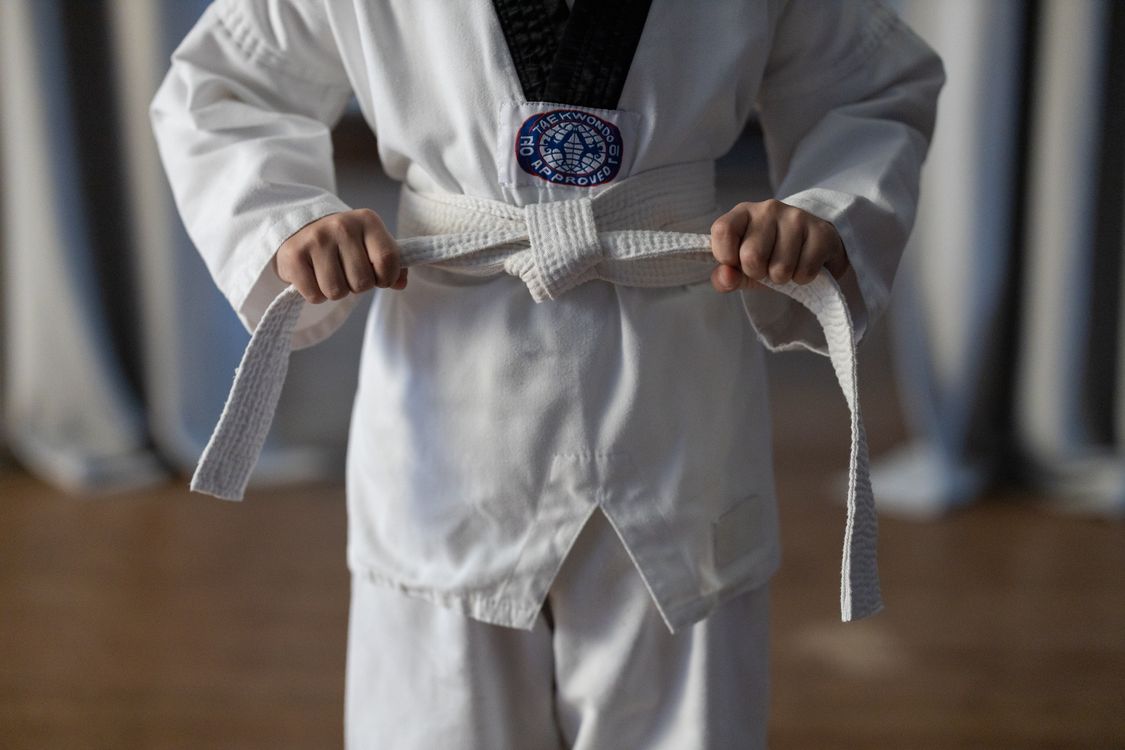
The first class decides whether there is a second one, and the thing that decides the first class is whether the beginner got personal attention from the person in charge.
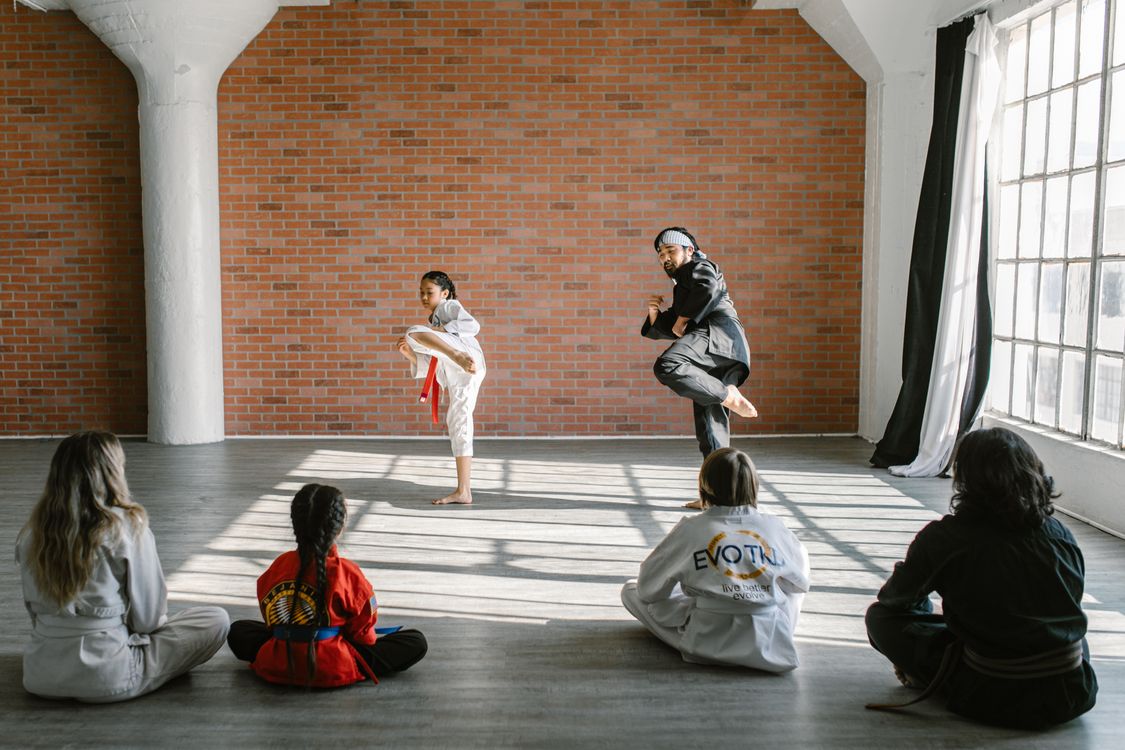
The mechanics matter more than the intention, so here is the shape I would use. Run the warm-up with everyone together, beginner included: standing in a line copying what the room does is the easiest possible first five minutes, and it makes them part of the class before anything is asked of them. When the class moves into the main block, hand the room to a senior student and take the beginner to the side of the mat for fifteen to twenty minutes. Decide before the class which senior student is taking the room, and hand them one specific thing to drill rather than telling them to carry on, because a vague hand-off is why most owners try this twice and give up. In those twenty minutes, work with the beginner on one simple technique, alone with you, at their pace. Then bring them back in and let them practise that same technique with the rest of the class.
That order is the whole point. Fifteen to twenty minutes is long enough for the beginner to get the head instructor, which is what they came for, and short enough that the rest of the class is still a class. And because they rejoin the group with something they can already do, their first experience of training alongside everyone else is one of keeping up rather than being lost. The 90-day dropout guide sets out why this single habit buys more than anything else you can do in month one.
It is also worth planning the class itself around the fact that a beginner is in the room. If you know someone new is starting, pick a session built on basics and simpler techniques rather than the one where the room is drilling something advanced. The beginner then comes back from their twenty minutes into a class they can follow, and your regulars get a basics session, which nobody ever trains worse for.
If two or three beginners start in the same week, which a free first week makes likely, take them as a small group for those twenty minutes rather than splitting yourself three ways. Three nervous people learning the same thing together is easier than one at a time, and they tend to pair up with each other afterwards.
For the rest of day one:
- Teach the etiquette before the technique. Where to stand, when to bow, what to do if they arrive late, how to signal that they need to stop. Not knowing the rules is the most common reason a beginner feels stupid, and feeling stupid is the most common reason they do not come back.
- Give them one thing they can do by the end. One stance, one roll, one block. Something they could show someone at home.
- Do not put them into free practice with a partner who outranks them by much, and do not put them into sparring or free fighting at all, which is randori in judo and aikido.
- Say goodbye to them personally, introduce them to two people on the way out, and name the next class you expect to see them at.
What the research says about why people stay backs this up. In the Norwegian study, the people still training a year later stood out on three things: they had joined expecting to enjoy it, they believed they could stick to it, and they had support from family and friends. Satisfaction with the club itself showed no measurable connection at all (Gjestvang et al., 2021). A beginner can think your dojo is excellent and still stop coming. Enjoyment and confidence are what hold them, and both are things you create on the mat in the first twenty minutes.

The First Week: Make It a Week, Not a Class
The aim of week one is a second and third visit, close together. Two sessions in seven days is worth more than two sessions in three weeks, because the second one still feels connected to the first.
There is an uncomfortable finding here that nobody in this industry mentions. A Canadian study of 111 people who had joined a gym in the previous fortnight found that establishing an exercise habit took about four sessions a week for six weeks (Kaushal & Rhodes, Journal of Behavioral Medicine, 2015). Most dojos run two or three classes a week and most beginners come to two. On that evidence, a twice-weekly beginner is not going to form an automatic habit in their first month, and you should plan for that rather than pretend otherwise.
The 90-day dropout guide treats that four-a-week figure as a target to push towards. Having watched beginners try, I would rather build the routine around the two or three sessions a dojo actually offers and keep them consistent. The same study found consistency mattered more than anything else, ahead of how complicated the activity was and where it happened, so same days, same time, every week beats a bigger number on a scattered schedule.
Practically, in week one:
- Tell them which classes suit a beginner. Name the two or three sessions that work best for someone starting out and leave the choice to them. A routine they picked themselves is one they keep.
- Then stay in touch about it. A review of 13 trials found that asking someone to plan when they would exercise had no measurable effect on its own. It only worked when the plan was reinforced afterwards (Silva et al., PLOS ONE, 2018). The form is not the intervention. You are.
- Keep the second class easy. Repeat most of what you did in the first. A beginner who recognises something feels competent; a beginner shown five new things feels lost.
- Mention the gi, do not sell it. Let them train in loose clothes for the free week. Buying a uniform before deciding to stay is a decision they are not ready to make.
Signing Up: The Money Conversation and the Paperwork
Have this conversation at the end of the free week, in person, before they leave the mat, and keep it to about two minutes.
What to have ready before you open your mouth:
- The membership options, with the monthly price, written down on one sheet. Two or three options at most.
- The start date, which is the day after the free week ends.
- The payment method set up before they leave. In Europe that usually means a SEPA Direct Debit mandate signed there and then; in the US a card on file. Collecting the first payment by bank transfer or cash and the rest automatically is fine too.
- The terms: notice period, what happens over holidays, whether the fee covers one class a week or all of them.
Say the price plainly and then stop talking. The most common mistake, and one I made for years, is explaining the price for ninety seconds because the silence is uncomfortable. The silence is them deciding. Let it run.
Do not sell a twelve-month contract to someone who has trained four times. A rolling monthly membership with a month's notice converts better and cancels less bitterly, and a beginner who feels trapped tells other people about it. The dojo owner's guide to payment collection covers the mechanics, and automated versus manual payments covers when it is worth automating.
Write down, the same evening: start date, plan, payment method, the days they said they would come, and anything personal they told you. That last one costs nothing and is the difference between an instructor who remembers your knee and one who does not.
When a New Student Misses a Class
This is the step almost every dojo skips, and the research says it is the most valuable one in the whole month.
In 2021 a team of thirty scientists ran 54 different four-week programmes on 61,293 members of a US gym chain, all at once, with a control group, to see which ones actually increased how often people turned up. Forty-five percent of the programmes worked, raising weekly visits by between 9% and 27%. The single best performer offered people a small reward for returning to the gym after a missed workout (Milkman et al., Nature, 2021).
The gains mostly faded once the four weeks ended, with only 8% of the programmes still measurable afterwards, so this is not an argument for a permanent reward scheme. What it tells you is that the moment right after a missed session is when a person is most movable, and that moment costs you nothing to reach.
There is a deadline on it, too. Following the same Brazilian gym data, 38% of people who dropped out came back within a year, and more than half of those returned within the first month of lapsing (Sperandei et al., Athens Journal of Sports, 2019). If you are going to chase someone, chase them in the first few weeks, not when you notice the cancelled payment.
So: when a new student misses a class in their first month, contact them the same day. One short, personal, low-pressure message. Here is what that sounds like, and what it should not.
Say this:
- "Hi Marco, missed you on Thursday. We did the basic forward roll and you were close to it last week, so come Tuesday and we will pick it up from there."
- "Hi Anna. Saw you skipped last training. Would love to see you next week! Tuesday or Thursday at 19:00? As last time, I will guide you personally for the first ten minutes."
- "Hi Tom, hope everything is all right. Yesterday we repeated last week, so you didn't miss new material. Come again next Tuesday."
Not this:
- "We noticed you have not attended recently." Nobody talks like this, and "we noticed" sounds like a bank.
- "Just checking you are still committed to your training." This makes a missed Thursday into a character question.
- "Your membership includes 8 classes a month and you have used 2." Correct, and the fastest way to make someone cancel.
- Nothing at all, and then an email three months later asking why they left.
The pattern in the good ones: name what happened in the class they missed, make the next step specific, and give them an easy way back in that does not require an explanation. The pattern in the bad ones: they ask the student to justify themselves.
Days 8 to 30: Turning Up Becomes a Routine
Weeks two to four are quiet work. The beginner is past the novelty and not yet a regular, and your job is to keep them attached to people rather than to a timetable.
- Give them a buddy and pair them with the same person every time. Pick one or two reliable students, introduce them to the beginner by name as the person they will be training with, and put the two of them together in every session for the first month. A beginner who knows who they are working with before they walk in has a reason to walk in, and the familiar face does more for that than the technique does. Decide the pairing before class rather than during it: it is the one thing in this list that will not happen by itself. Support from the people around them was one of the few things linked to still training a year later in the Norwegian study.
- Give them one new thing a week and let them get good at it. Competence is what makes a beginner feel like a student.
- Do not promise a grading date. Explain how gradings work and what the first one looks like, and leave the timing open. Belt progression as a retention tool covers where this helps and where it backfires.
- Check the attendance list once a week. Ten minutes. Anyone in their first month who has come to fewer than half the classes available to them gets a message that week.
What happens after day 30 matters as much, and it is a different job from this one. The 90-day dropout guide linked above picks up where this checklist ends.

The Day 30 Conversation
Have a real conversation at the end of the first month, standing up, after class, five minutes. Not a form, not an email survey.
Ask three things:
- "What has been the best bit so far?" The answer tells you what to give them more of, and it is almost never what you would guess.
- "What is the hardest part?" If it is a technique, help. If it is the time of the class, the cost, or feeling out of place, you have just found the reason they would have quit in month three.
- "Are the days you have been coming still working?" Schedules change in a month. A beginner will quietly stop coming rather than ask to switch to a different class.
Then say what comes next in concrete terms: the movements they will be working on over the next two months, and which classes those will be in. For most beginners that is the whole answer. The job at one month is to keep coming, enjoy it, learn the basic movements and get to know the people in the club, and saying so out loud takes pressure off rather than adding it.
Leave grading out of it unless they raise it or you already know they want it. Three months in is early for a first grading, and for plenty of people a syllabus and a date turn something they were enjoying into something they can fail. If they are competitive, or they ask about belts themselves, then it is worth having: say that in a couple of months, if they would like to grade, the two of you can sit down and work out what the road there looks like. Then leave it there.
Write down what they said. If you do nothing else from this guide, do this conversation, because it is the only part of the month where the student tells you the truth.
What Not to Do in a Beginner's First Month
Positive advice is only half of it. These are the things that feel sensible and are not.
- Do not let a beginner stand at the back and copy. It looks like kindness and it is abandonment. They cannot see what the person in front is doing wrong.
- Do not put them into sparring or free fighting. Not even gently, not even with a black belt who will be careful. A beginner cannot yet tell a controlled attack from a real one, so what you intend as restraint they experience as being overwhelmed.
- Do not sell a long contract on day one. A rolling monthly membership cancels less bitterly, and a beginner who feels trapped tells other people about it.
- Do not treat the automated payment as evidence they are fine. Whatever you collect on, a standing bank mandate or a card on file, it is the last thing to change, not the first.
- Do not hand out a goal-setting form and call it onboarding. On its own it does nothing at all (Silva et al., 2018). What works is you coming back to the plan afterwards.
- Do not promise a belt by a date. You will either break the promise or hand out a grading that was not earned, and the second one costs you more.
- Do not wait for them to come back on their own. They have already decided it would be awkward.

The 30-Day Onboarding Checklist
Print this, or keep it next to your attendance list. The third column is the part that makes it work a second time.
How to Track This Without Taking On a Second Job
None of the above works from paper records. Comparing each student against the days they said they would train is the one thing a register in a ring binder cannot do, because you would have to hold thirty different timetables in your head.
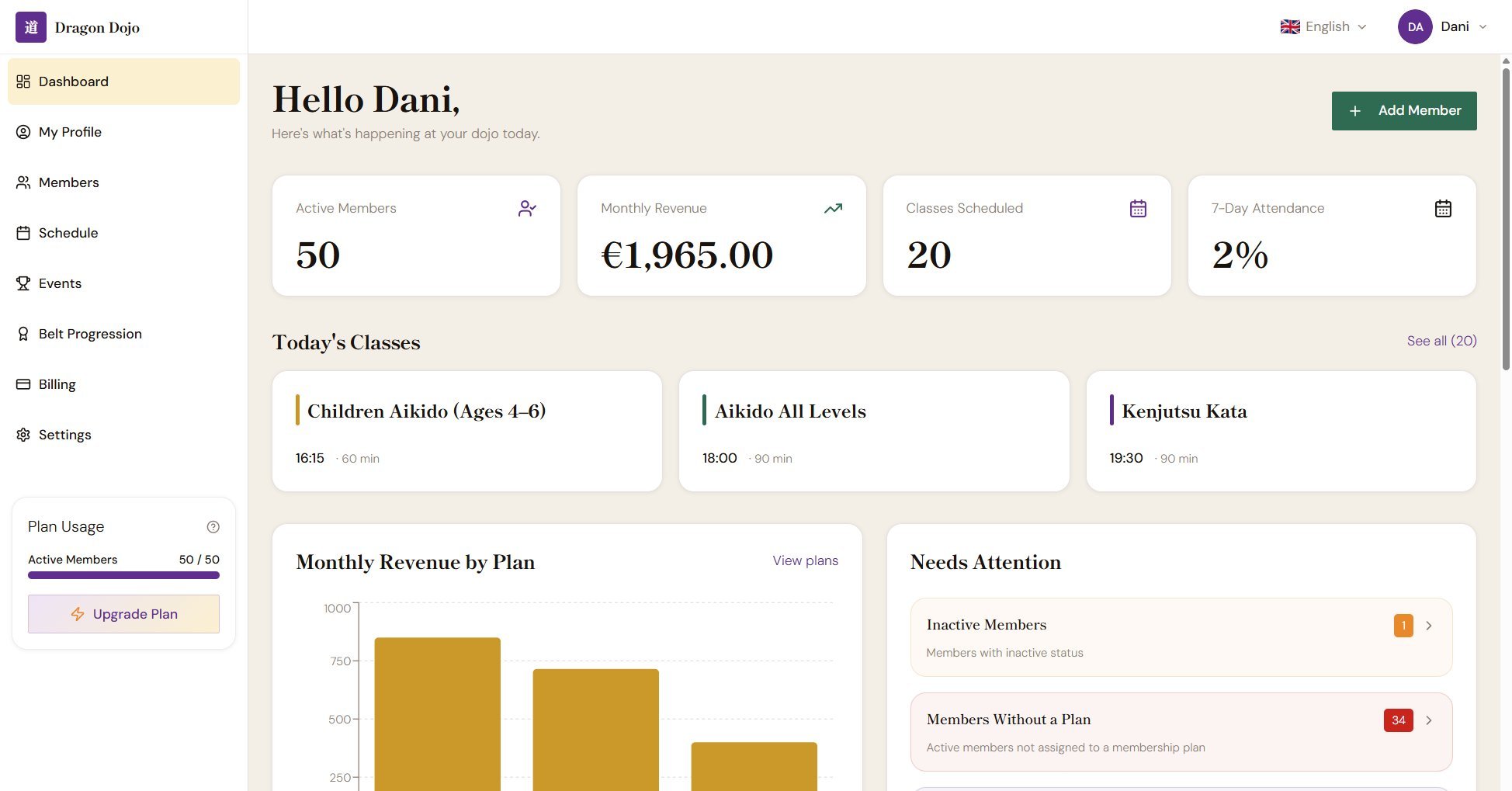
You need one of two things. A spreadsheet such as Google Sheets, with a row per student, the days they train, and a tick per class, is enough for a school of this size and costs nothing. Dojo management software does the same thing without the maintenance, and records belt progression and payments in the same place.
Either way, keep the weekly check crude. Do not calculate percentages. Run your eye down the column and tick anyone in their first month who has come to fewer than half of their classes. That list is your week's work.
From my own dojo: I ran my 40-student Aikido school on a Google Sheet and Stripe invoices for two years. The attendance tab was accurate and I almost never looked at it, because looking at it meant counting. What finally worked was a dumb rule: every Sunday evening, two minutes, find anyone in their first month with fewer than half their classes ticked and send one message. Not a system, a habit.
If your spreadsheet has started to creak, the signs your dojo has outgrown Excel covers when that tips over.
The cheapest way to get attendance recorded without writing anything down yourself is kiosk check-in: students tap their own name on a tablet by the door on the way in. Where all of this sits in the wider running of a school is covered in the complete guide to dojo management.
Frequently Asked Questions
How long should onboarding a new martial arts student take?
Treat the first 30 days as the onboarding period, and plan for the real risk to continue for several months after it. Research on new fitness club members found that only 51.8% were still training at least twice a week after three months and 37.6% after six, so the steepest fall happens after the first month is over. Use the 30 days to set the routine, let the student settle on the days that suit them, and get the first missed-class conversation out of the way, then keep checking attendance monthly.
How many times a week should a beginner train?
Twice a week on consistent days is the realistic target for most dojos, and consistency matters more than volume. One Canadian study of 111 new gym members found that about four sessions a week for six weeks was what it took to build an automatic habit, which is more than most martial arts timetables offer. Rather than chase that number, keep the same days and the same time every week, which the same study found was the strongest factor of all.
What should I do when a new student misses a class?
Send one short personal message the same day, naming what they missed and making the next step specific. In a test of 54 different programmes on 61,293 gym members, the most effective of all gave people a small reward for coming back after a missed session, which suggests the moment right after an absence is when a person is most movable. Do not ask them to explain themselves, and do not quote their class usage at them.
Should the first martial arts class be free, or the first week?
Both work, but a free first week gives a beginner more. A single class is mostly nerves, and the second class is the one where the person finds out whether they enjoy the training itself. A free week also gives you a cleaner conversion measure: the people who took a free week and then signed up, divided by everyone who took a free week that month. Compare that figure only with your own previous months.
What percentage of martial arts beginners quit in the first month?
Nobody knows, and any specific figure you see quoted for martial arts has no study behind it. No credible research has been published on dropout in martial arts schools specifically. The closest evidence comes from commercial fitness clubs, where one Brazilian study of 5,240 members found 63% stopped before the third month and a Norwegian study of 250 new members found 51.8% were still training twice a week at three months. Measure your own school instead of trusting a borrowed benchmark.
DojoMaster keeps each student's record, attendance and belt progression in one place, in 16 languages, so the weekly ten-minute check means looking at one screen instead of three spreadsheet tabs. Kiosk check-in is included on every plan, so the attendance data arrives without you writing anything down. Start free at dojomaster.app for up to 20 students, with paid plans from EUR 24/month.
Written by Daniil Pavliuchkov, 4th dan Aikido Aikikai and founder of DojoMaster. Sources: Gjestvang et al., Frontiers in Psychology (2021), Milkman et al., Nature (2021), Silva et al., PLOS ONE (2018), Kaushal & Rhodes, Journal of Behavioral Medicine (2015), Sperandei et al., Journal of Science and Medicine in Sport (2016), Sperandei et al., Athens Journal of Sports (2019), Regulation (EU) 2016/679, Article 7 (EUR-Lex).