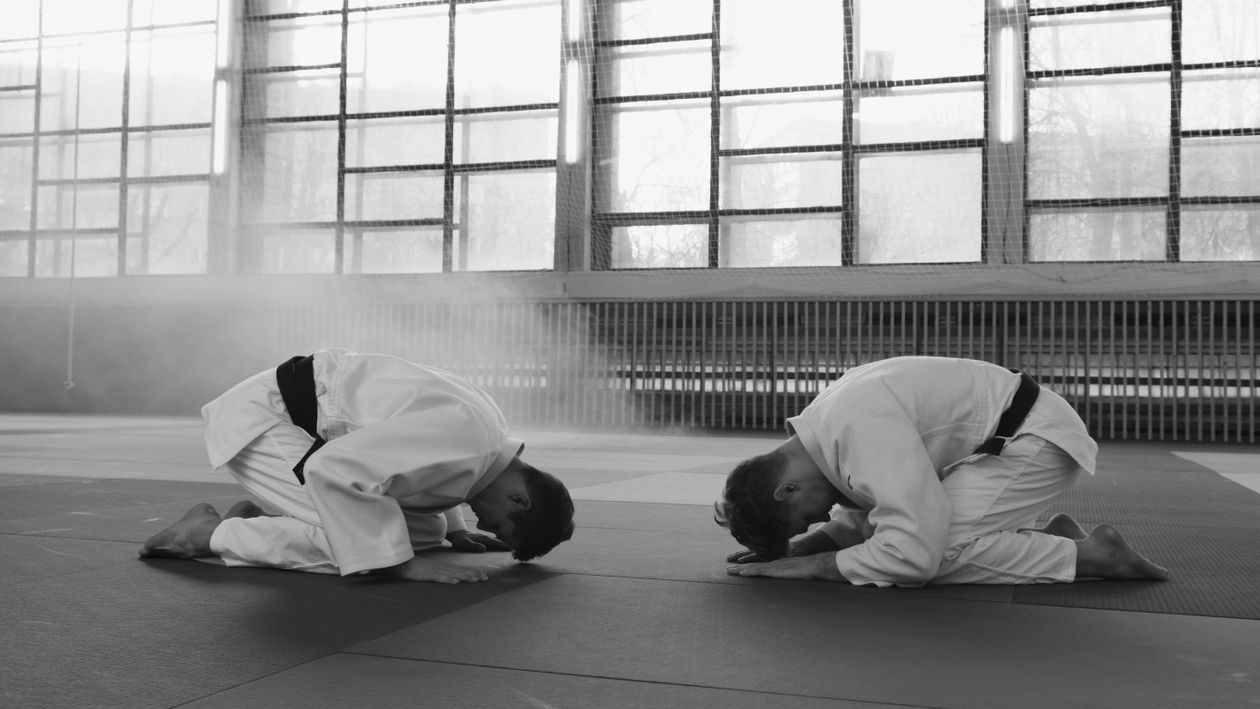


Your belt system is the most powerful retention tool in your dojo, and most schools waste it. A belt is not just a rank marker. It is a visible, public goal that taps a well-documented quirk of human motivation: people accelerate their effort as a reward gets closer (Kivetz, Urminsky & Zheng, Journal of Marketing Research, 2006). Used deliberately, the path from white to black becomes a chain of goals a student can always see themselves moving toward. Used carelessly, the same system quietly pushes students out the door the week after they grade.
I learned this the slow way, as a 4th dan Aikido practitioner who ran his own dojo and watched students disappear at the exact moment I thought they were most committed. This guide explains the psychology of why progression keeps students, where it backfires, and how to build a belt system that retains, whether your art grades every three months or once a year.
Key Takeaways
- Belts retain students through the goal-gradient effect: effort accelerates as a visible reward nears (Kivetz et al., 2006). The catch is that the moment the goal is reached, motivation resets to far away.
- Making progress visible is what does the work. Across 138 studies (N=19,951), monitoring progress toward a goal reliably increased goal attainment, and the effect was stronger when progress was physically recorded or publicly displayed (Harkin et al., Psychological Bulletin, 2016).
- The students most at risk are the ones who just got promoted, not the ones struggling. This is most costly at black belt, which many students treat as the finish line.
- Stepping stones and intermediate markers beat one distant belt. For slow-grading arts especially, a student staring at a year until the next rank needs smaller wins along the way.
- Belts work because they satisfy the need for competence, one of the most consistent drivers of long-term adherence (Teixeira et al., 2012). They are not a substitute for community.
The Complete Guide to Student Retention
Why Does Belt Progression Keep Students Training?
Belt progression keeps students because it converts the vague ambition of “getting better” into a concrete goal they can see approaching, and humans work harder the closer a visible goal gets. This is the goal-gradient effect, and it is unusually well evidenced: in a study of café loyalty cards, customers bought coffee more frequently the closer they were to a free drink, and a card with two “bonus” stamps already filled was completed faster than an identical card with the same real distance to go (Kivetz, Urminsky & Zheng, Journal of Marketing Research, 2006). A belt is that free coffee, except it also confers status, identity, and the right to a new technique set.
Underneath the goal-gradient effect sits something deeper. Self-determination theory, the most validated framework on human motivation, finds that the need for competence, the sense of getting better at something, is one of the most consistent predictors of who keeps training long-term (Teixeira et al., International Journal of Behavioral Nutrition and Physical Activity, 2012). A belt is the cleanest possible proof of competence. It says, in front of the whole room, “you are measurably better than you were.” That is why a grading certificate outlasts almost any motivational speech.
Nearly every martial arts school on earth already has a ranking system, and most of them leave it sitting unused as a retention lever. The difference between the schools that keep students and the ones that lose them is rarely the belts themselves. It is whether the path between them is visible.

Belt progression retains students through the goal-gradient effect: people accelerate effort as a visible reward gets closer, and a pre-filled “head start” accelerates them further (Kivetz et al., Journal of Marketing Research, 2006). A belt is also the clearest possible proof of competence, which self-determination theory identifies as one of the most consistent predictors of long-term adherence (Teixeira et al., 2012).
Does Visible Progress Actually Improve Retention?
Yes, and the evidence is strong: simply letting people see their progress toward a goal makes them more likely to reach it. A meta-analysis of 138 studies covering 19,951 participants found that monitoring progress toward a goal reliably promoted goal attainment, and the effect was larger when progress was physically recorded or publicly reported rather than just kept in someone's head (Harkin et al., Psychological Bulletin, 2016). For a dojo, that is a direct instruction: do not keep a student's progress in your own head. Put it where they can see it.
This is also why gamified progress mechanics, points, levels, streaks, and badges, have measurable effects on activity and adherence. A 2025 systematic review and meta-analysis of 16 randomized trials covering 7,472 young people found that gamification produced a small but statistically significant increase in moderate-to-vigorous physical activity (JMIR Serious Games, 2025). The honest reading is that the effect is modest, not magic, but it points the same direction as the goal-gradient and progress-monitoring research: visible, structured progress changes behavior. Your belt and stripe system is the original gamification, invented decades before the word existed.
The practical mistake most schools make is treating the belt as the only visible marker. In an art that grades twice a year, a student spends months with no visible movement at all. The progress is real, their technique is improving, but they cannot see it, so it does not motivate them. The fix is to make the in-between progress visible too, which is exactly what stripes, attendance counts, and curriculum checklists are for.
Illustrative pattern based on the goal-gradient effect (Kivetz et al., 2006).
Visible progress improves retention. A meta-analysis of 138 studies (N=19,951) found that monitoring progress toward a goal reliably increased goal attainment, with stronger effects when progress was physically recorded or publicly displayed (Harkin et al., Psychological Bulletin, 2016). Gamified progress mechanics produced a small but significant increase in physical activity across 16 randomized trials (JMIR Serious Games, 2025).
Track Belt Progression Digitally
Why Do Students Quit Right After a Belt Test?
Counterintuitively, one of the highest-risk moments in a student's journey is the lull right after they pass a grading. The goal-gradient effect explains exactly why: if effort accelerates as a goal nears, then the instant the goal is reached, the next one resets to far away and motivation drops sharply (Kivetz et al., 2006). The same study documented this “post-reward reset,” where people slow down immediately after earning a reward before re-engaging. Most owners read a freshly promoted student as more committed, not less, and so they look away at the exact moment they should be paying closest attention.
The students I lost over the years were rarely the ones struggling at the back of the room. They were often the ones who had just succeeded and found nothing waiting on the other side of it. A green belt who has wanted green for a year reaches it, feels the glow for a week, and then realizes the next belt is another year away. If nobody fills that gap, they fade.
From my own dojo:
The saddest version of this, and the one I have seen most often, is the black belt who walks away. For a lot of people the black belt *is* the goal. They tell you on day one, "I want to earn a black belt," and that single ambition carries them for years. Then they earn it, decide they have arrived, and start training less, a missed class, then a missed week, and then they are gone. I have watched it happen to talented students who could have gone so much further, and to the friend who first brought me to Aikido. I kept going and I am a 4th dan now; he stopped the year he made black belt. It stings far more than losing a white belt who never really started, because a black belt is not the finish line. It is the moment you finally have the basics to begin mastering the art. The most interesting part of the path begins the day after the one most people quit.
The fix works at every rank and it is simple: at the moment of promotion, immediately name the next near-term target. Not the next belt a year out, but the next visible step, the next technique to own, the next seminar to attend, the next competition to enter. For black belts especially, the most valuable thing you can hand over with the belt is a new definition of the goal: the belt was never the destination, it was the license to begin. Never let a student stand on a summit without already pointing at the next one.

Students are at high risk of quitting right after a belt promotion because the goal-gradient effect predicts a motivation reset once a reward is reached: effort falls off as the next goal resets to far away (Kivetz et al., 2006). This is most common and most costly at black belt, which many students treat as the finish line. The fix is to name the next near-term target at the moment of grading, every time.
How Do You Build a Belt System That Retains Students?
A retention-building belt system rests on four principles: progress is always visible, the gaps between belts are filled with smaller markers, criteria are objective, and every promotion ends with the next goal already set. The table below contrasts the version that leaks students with the version that keeps them.
| Belt system that leaks students | Belt system that retains | |
|---|---|---|
| Progress visibility | Only the instructor knows how close a student is | Student and parent can see "18 of 40 classes, 2 of 6 months" any time |
| Between belts | One distant grading, nothing in between | Stepping stones or stripes every few weeks |
| Criteria | Subjective, "when I think you're ready" | Objective and published: classes, time-in-rank, curriculum |
| After a grading | Glow, then silence | Next near-term target set the same night |
| Cadence in slow arts | A year between visible movement | A monthly focus surfaces wins along the way |
| What's celebrated | Only the belt itself | Streaks, attendance milestones, technique mastery |
Here is how to put that into practice.
1. Make the Path Visible to the Student
Publish the requirements for the next rank and show each student where they stand against them. A student who can see “you are 80% of the way to your next grading” is being handed exactly the visible progress the research says drives goal attainment (Harkin et al., 2016). A student who has to ask is being kept in the dark.
2. Break the Distance Into Stepping Stones
If your art grades slowly, invent visible steps between belts: stripes, curriculum checkpoints, attendance milestones. BJJ already does this with four stripes per belt for a reason.
In my own dojo, I tell each newcomer that Aikido has hundreds of techniques, but for them, a beginner, it really comes down to getting good at five things:
- Movement — stepping forward and back, turning on the spot, switching feet.
- Falling (ukemi) — forward, backward, and side rolls.
- Attacking — punches, kicks, hits, grabs and strikes. In aikido those would be shomen or yokomen, wrist grab, shoulder grab, or behind the back grab.
- Controls — Aikido has five basic pins and joint locks.
- Sword work — a couple of basic patterns, because the sword builds your center and feeds back into everything else.
Then comes the part that hooks them. I tell them they only need two of those five, falling and attacking, before they can start freely training with everybody else. Not knowing 10+ techniques, not even the footwork, because a partner can practice their technique on you as long as you fall safely and attack honestly. For today's class, both can be learned in about ten minutes. For next class, we will learn 1-2 more attacks.
So a newcomer walks out of their first class already two-fifths of the way to being a real training partner, and with every class they learn something new.
That is the goal-gradient “head start” made real. The research shows that even an artificial head start, a loyalty card pre-stamped with two free boxes, accelerates people toward the reward (Kivetz et al., 2006). In a dojo you can give a genuine one: two stepping stones the student actually earned on night one. A beginner who can see three markers left instead of a blank, year-long stretch pulls toward the next one.
3. Tie Readiness to Attendance, Not Just Time
The most motivating progress marker is one the student controls. “Attend 40 classes” is in their hands in a way “wait six months” is not. Linking promotion readiness to attendance turns every single class into a visible step forward, and it gives you an early-warning signal when someone stops moving.
4. End Every Promotion With the Next Goal
Build it into the grading ritual itself. The new belt is handed over, and in the same breath the next target is named. This is the single highest-leverage habit in this whole guide, and it directly defuses the post-promotion lull.
From my own dojo:
Every grading in Aikido comes with a syllabus for the *next* one, and it usually looks daunting, a pile of new controls or attacks or techniques. So I shrink it. I tell the student, "That's a big list, so this month we're only going to work on one piece of it, the joint locks," and that becomes the theme of the next few weeks. Then I offer a deal: every couple of weeks I'll tell them honestly how they're doing and whether that piece is good enough for the next grading yet. It does two things. It gives the student a clear goal this week and this month, even when the actual grading is six months or a year away. And it means they never move on from a technique having only half-learned it, because they always know exactly where they stand.

The retention loop hiding in your belt system.
Attendance feeds readiness. Visible readiness drives engagement ("I'm only five classes away"). Engagement drives the next grading. The grading, done right, sets the next goal, and the loop restarts. Break any link, track attendance in one place and belts in another, hide the progress, or let a promotion end in silence, and the loop stops turning. Most schools own every piece of this engine and never connect them.
Catch Fading Students With Attendance Tracking
How Does Software Make Belt Progression Visible?
Software's job here is to make the invisible visible without adding work, by connecting attendance directly to belt readiness and surfacing that progress to everyone who needs to see it. The gym management software market reached roughly $2.23 billion in 2026 (according to 360iResearch, 2026), but most of those tools were built for fitness check-ins and have no concept of a belt hierarchy, time-in-rank, or grading readiness. Purpose-built dojo software does.
In practice, that means three things. First, a readiness dashboard shows every student's current belt, classes since their last promotion, time at rank, and an eligibility status, so scheduling a grading becomes a five-second filter instead of a manual review. Second, student and parent visibility: progress toward the next belt is something they can see, which is the publicly displayed progress that strengthens goal attainment (Harkin et al., 2016). Third, a complete promotion history so the next near-term goal can be set against a real record rather than memory.
DojoMaster was built for exactly this loop, by a martial artist rather than a fitness chain. It links every class check-in to belt readiness, keeps that progress visible to students and parents, supports custom belt hierarchies and stripes for any art, and even parses handwritten grading sheets with AI so recording an exam takes seconds. The belt system you already run becomes a retention engine that runs itself.
Software turns a belt system into a retention engine by connecting attendance to grading readiness and making progress visible to students and parents, the publicly displayed progress that strengthens goal attainment (Harkin et al., 2016). Generic fitness software, the bulk of a roughly $2.23 billion market (360iResearch, 2026), has no concept of belt hierarchy or time-in-rank; purpose-built dojo software does.
The Complete Guide to Dojo Management
Turn Your Belt System Into a Retention Engine
DojoMaster connects attendance to belt readiness, keeps progress visible to students and parents, and supports custom belt hierarchies and stripes for any martial art. Start free with up to 20 students, no credit card required. Paid plans from EUR 24/month — still 3-10x less than competitors.
Frequently Asked Questions
Does belt progression actually improve student retention?
Yes, when the progress is visible. Belts tap the goal-gradient effect, the documented tendency to work harder as a reward gets closer (Kivetz et al., 2006), and visible progress toward a goal reliably increases goal attainment across 138 studies (Harkin et al., 2016). The benefit comes from students being able to see themselves moving toward the next rank, not from the existence of belts alone.
Why do students quit right after a belt test?
Because the goal they had been chasing suddenly resets to far away. The goal-gradient effect predicts a motivation drop immediately after a reward is reached (Kivetz et al., 2006). A freshly promoted student often looks committed but is actually at high risk. It is most common and most costly at black belt, which many treat as the finish line. The fix is to name the next near-term target at the moment of promotion, before they leave the mat.
How do you keep students motivated in arts that grade slowly?
Break the long gap into smaller, visible goals. Set a monthly theme from the next grading's syllabus and give honest readiness feedback every couple of weeks, so the student always has a goal this week even when the grading is a year away. Breaking the path to a belt into a handful of concrete stepping stones, and giving beginners a genuine head start on the first two, turns one distant grading into a chain of nearby wins (the goal-gradient effect, Kivetz et al., 2006).
Is a belt system enough to retain students on its own?
No. Belts satisfy the need for competence, one of the strongest drivers of long-term adherence (Teixeira et al., 2012), but motivation also depends on enjoyment and belonging. Belts get a student to the next grading; community keeps them for a decade. Use progression as one engine alongside strong onboarding and a real sense of belonging.
What is the best way to track belt progression?
Connect it to attendance so every class counts as visible progress, and make readiness visible to students and parents. Purpose-built dojo software like DojoMaster links check-ins to belt requirements automatically, shows a readiness dashboard, and keeps a full promotion history, removing the manual counting that makes spreadsheet tracking unreliable past about 30 students.
Conclusion
Your belt system is already a retention engine. The only question is whether it is switched on. Left as a row of distant gradings, it motivates students for a few weeks a year and quietly loses them in the long middle and the silent week after each promotion. Made visible, broken into stepping stones, tied to attendance, and capped with a next goal at every step, it pulls students forward continuously, exactly the way the goal-gradient effect and decades of progress-monitoring research say it should.
None of this requires changing your curriculum or your standards. It requires making progress something a student can see, and never letting a promotion end without naming what comes next, all the way up to the black belt, where the most interesting part of the journey is only beginning. Do that, and the same belts you already award will keep more of your students on the mat, year after year.
The Complete Guide to Student Retention
Written by Daniil Pavliuchkov, 4th dan Aikido Aikikai and founder of DojoMaster. Built with research from Kivetz, Urminsky & Zheng (Journal of Marketing Research), Harkin et al. (Psychological Bulletin), Teixeira et al. (IJBNPA), JMIR Serious Games, and 360iResearch.