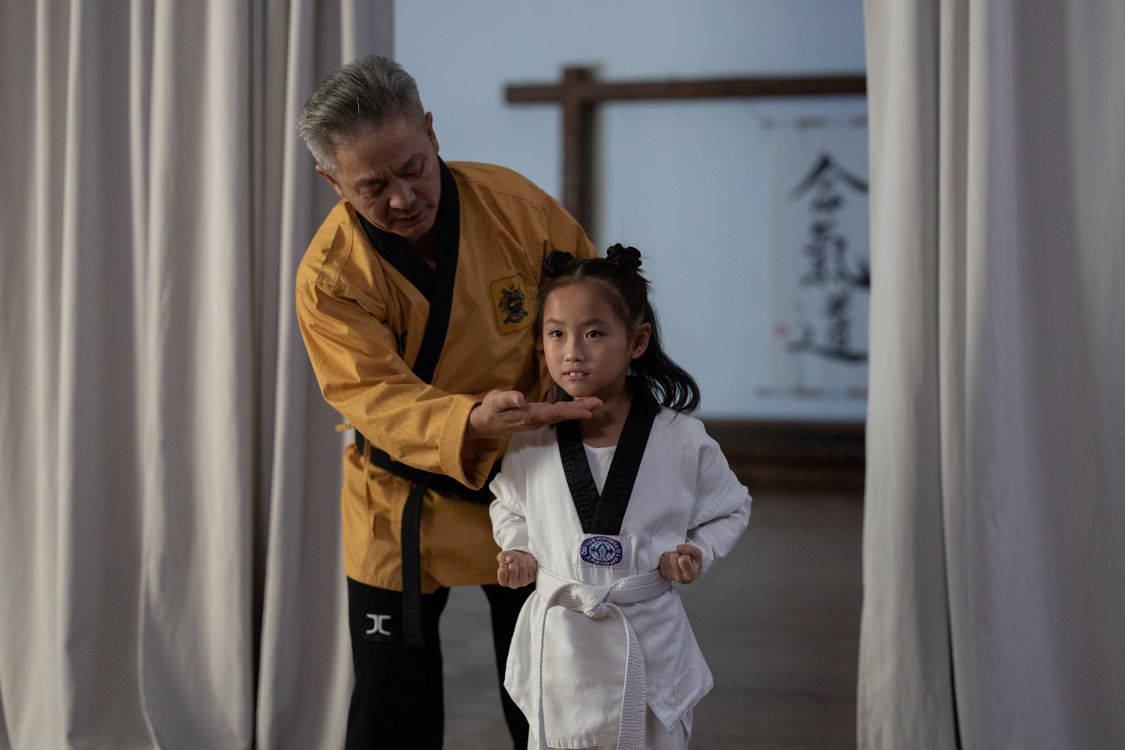

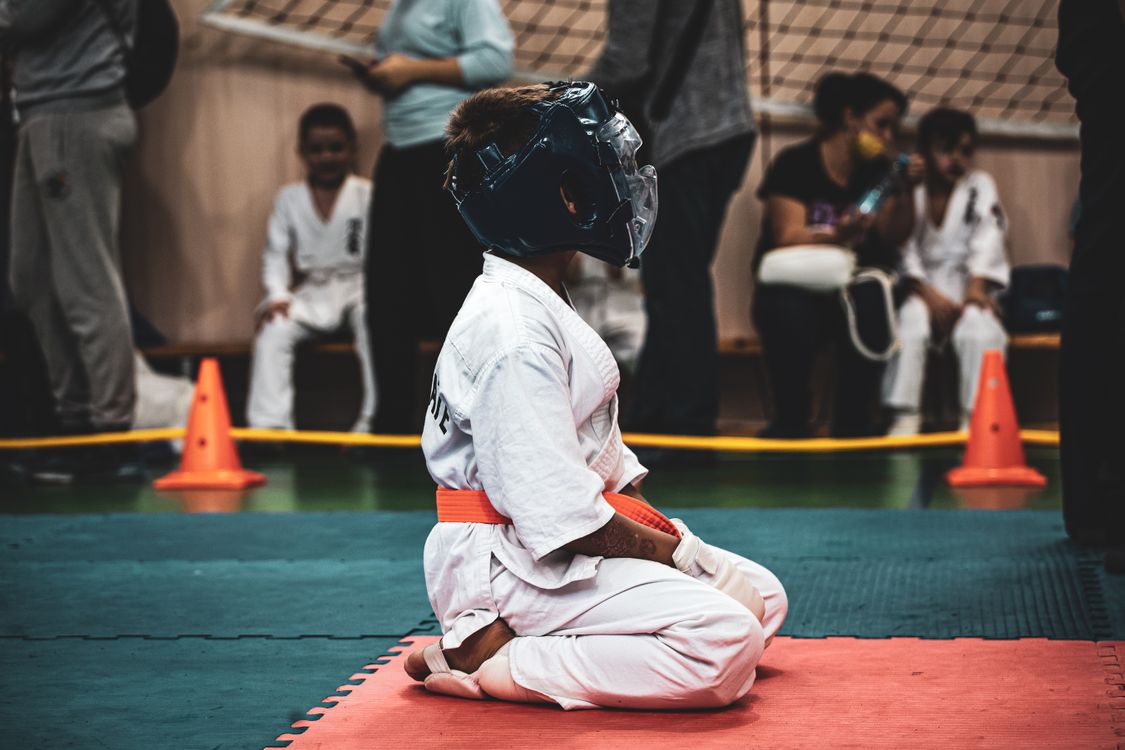
Every martial arts school has a number it doesn't like to look at: how many of the people who signed up last year are still on the mat. The honest answer is usually uncomfortable. Across organized youth sport, roughly one in three participants drops out every single year (Frontiers in Public Health systematic review, 2024). Martial arts is not exempt, and most owners notice the leak only when the room starts to look empty.
Here is the part the retention guides rarely say out loud. Students arrive on a wave of interest. They love Japan, they saw it in a Kurosawa film or an anime, they want to get fitter or finally learn the thing from the movie. That interest is real, but it is a spark, not a fuel. Ride the interest wave alone and almost everyone burns out within a few months. What turns a curious beginner into a ten-year student is not your marketing and not your price. It is community and a sense of belonging.
This guide explains the behavioral science of why students leave and stay, grounded in real, named research rather than the recycled numbers the industry repeats. Then it hands you the community playbook I used as a 4th dan Aikido practitioner, first as a student who stayed because of the people, and later as the owner of my own dojo.
Key Takeaways
- Retention is the biggest lever on a dojo's revenue: a 5% increase in retention can raise profit by 25–95% (Reichheld/Bain via Harvard Business Review, 2014).
- About 1 in 3 youth athletes drop out of organized sport every year, usually because it stopped being fun or they felt they weren't good enough, not because of price (Frontiers in Public Health, 2024).
- Dropout is front-loaded: the highest risk is in the first weeks, before training becomes a habit, which takes a median of 66 days and can take up to 254 (Lally et al., 2010).
- Interest gets a student through the door; community keeps them for a decade. Belonging is one of the three drivers of durable motivation in self-determination theory (Teixeira et al., 2012).
- There is no peer-reviewed data on martial-arts-specific retention. This guide builds on rigorous sport-and-exercise science, plus first-hand experience, not the unsourced numbers the industry trades.
The Complete Guide to Dojo Management in 2026
What Does Student Retention Actually Mean for a Dojo?
Student retention is the share of students still training after a given period, and it is the single most important number on a dojo's profit and loss statement. The reason is leverage: a 5% increase in customer retention can raise profit by 25–95%, because retained customers cost less to serve and spend more over time (Reichheld/Bain via Harvard Business Review, 2014). Retention compounds where acquisition does not.
A retained student is worth far more than a new one. They pay tuition longer, they sit belt gradings and pay testing fees, they buy seminar tickets, and, most valuably, they bring friends. A new student is the opposite: expensive to win and unproven. Harvard Business Review notes that acquiring a customer can cost anywhere from 5 to 25 times more than retaining one, while cautioning that the exact multiple depends on which study you believe (HBR, 2014). Either way, the math favors keeping the students you already have.
It also helps to separate two kinds of loss. Voluntary churn is when a student decides to leave. Involuntary churn is quieter and often invisible: a failed card, an expired mandate, a payment that simply didn't go through, and a student who drifts off because nobody noticed. The second kind is a solved problem if your billing is automated, which is why payment systems belong in any serious retention conversation.
What It Costs to Run a Martial Arts School
Involuntary Churn and Failed Payments
Why Do Students Really Quit?
The research on why people leave sport is remarkably consistent, and it is rarely about money. Across youth sport, the dominant reasons are that:
- it stopped being fun,
- the participant felt they weren't good enough, and
- burnout or weak social support set in (Frontiers in Public Health systematic review, 2024). The average child quits sport by around age 11, after fewer than three years of playing (Aspen Institute Project Play, 2019).
It helps to group the reasons into three layers. Individual reasons are about the experience itself: low enjoyment, a feeling of not improving (what researchers call low perceived competence), and burnout. Interpersonal reasons are about people: an instructor a student doesn't connect with, peers they don't feel part of, or parents who stopped showing up. Structural reasons are practical: cost, time, and travel. Owners instinctively reach for the structural lever and start discounting, but price is rarely the real driver. A student who feels they belong and are improving will find the money. A student who feels neither will quit at any price.
How high does the churn run? In general youth sport, year-over-year dropout routinely sits between 40% and 56% depending on the sport.
One honest caveat runs through this whole guide: there is no peer-reviewed study reporting retention or dropout rates specific to martial arts. Every precise "martial arts" percentage you find online traces back to a software vendor with no disclosed method. So we reason from the rigorous sport-and-exercise science underneath, and we say clearly when a number is general youth sport rather than the dojo down the road.
Across youth sport, participants quit mainly because it stopped being fun, they felt they weren't improving, or they burned out, rarely because of price (Frontiers in Public Health, 2024). The average child quits by age 11 after fewer than three years (Aspen Institute Project Play, 2019). No peer-reviewed study reports martial-arts-specific dropout rates.
When Are Students Most at Risk of Leaving?
Dropout is front-loaded. The highest risk sits in the first weeks, before training has become a habit, and habit formation takes longer than most owners assume: a median of 66 days, with a range stretching from 18 to 254 days depending on the person and the behavior (Lally et al., European Journal of Social Psychology, 2010). For the first two months, a new student is running on intention alone, and intention is fragile. Miss two weeks and the half-formed routine collapses.
There are two more danger windows after that. The first is the months-3-6 plateau, when the rapid beginner gains slow down and the novelty wears off. The second is the strangest one, and most owners never see it coming: the lull right after a belt promotion, which we'll come back to in the next section.
The practical lesson is that the popular "first 90 days are decisive" advice is right, but for a real reason rather than a marketing one: at 30, 60, even 90 days, most students still haven't crossed into automatic habit. Your job is to carry them across that gap deliberately, not to hope they make it on enthusiasm. That is what the next three sections are about.
Dropout is front-loaded. The highest risk is in the first weeks, before training becomes automatic, and habit formation takes a median of 66 days, ranging from 18 to 254 (Lally et al., European Journal of Social Psychology, 2010). Two later risk windows follow: the months-3-6 plateau and the lull right after a belt promotion.
How Do You Turn a Beginner Into a Lifer in the First 30 Days?
Onboarding is the highest-return retention work you will ever do, because the first month is where a shallow reason to train ("I should get fit") has to deepen into an identity ("I'm a martial artist"). Self-determination theory, the most validated framework on human motivation, identifies three needs that drive durable, self-sustaining motivation: competence, autonomy, and relatedness (Teixeira et al., 2012). A good first month delivers an early win on all three: the student feels they can do it, feels they chose it, and feels they belong.
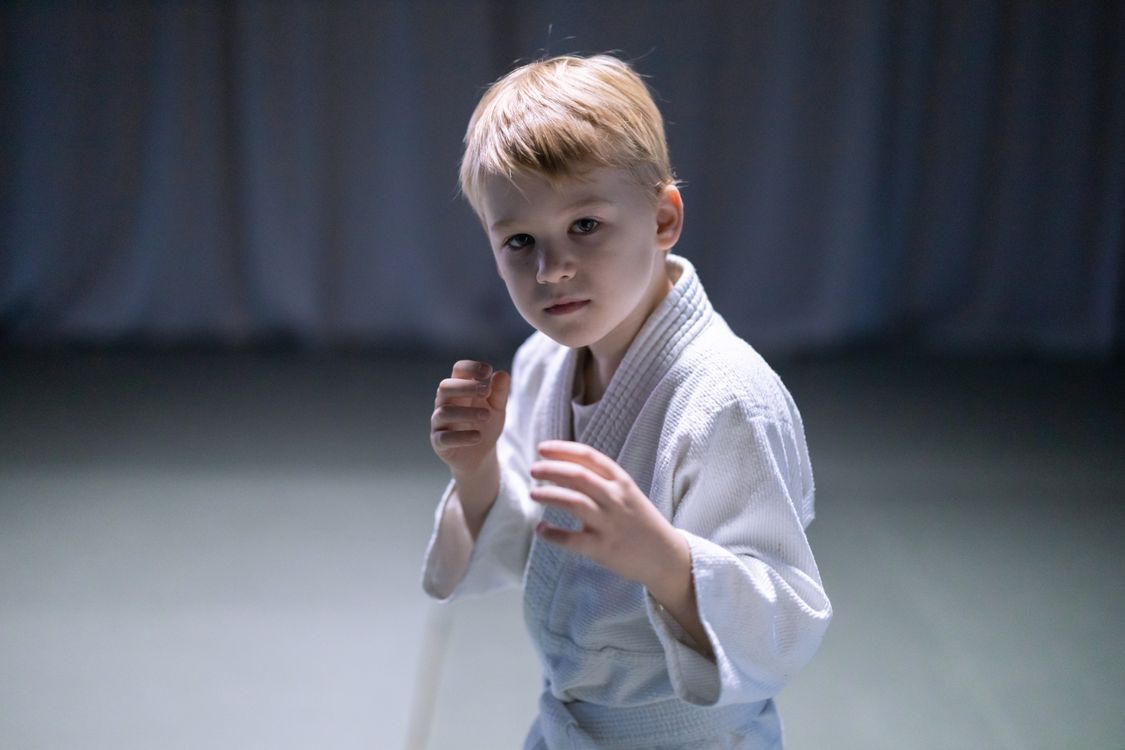
The first impression outlasts the first technique. People rarely remember what they learned in week one, but they remember how it felt to walk in not knowing anyone and to leave feeling welcomed. So engineer that feeling on purpose.
From my own dojo: When a new student arrives, I spend the first 15 to 20 minutes with them one-on-one, right after the warm-up. I explain what Aikido actually is, where it comes from, and I walk them through a few basic movements at their own pace. The class can't stop while I do this, so I hand it to a senior student for those twenty minutes, telling them exactly which techniques or principles to highlight. The beginner gets a real competence win and feels personally seen on day one. And, as you'll see, the senior student gets something just as valuable.
The students I lost over the years were almost never the ones who were struggling. They were often the ones who had just succeeded and didn't know what came next, or the ones who came twice, enjoyed it, and then quietly missed week three before the habit had formed. Catch that. A friendly message after a missed class in the first month is worth more than any discount, which is why a simple attendance system that flags no-shows pays for itself in retained beginners.
Onboarding is the highest-ROI retention work because the first month converts shallow extrinsic motivation into intrinsic motivation. Self-determination theory identifies three needs behind durable motivation: competence, autonomy, and relatedness (Teixeira et al., 2012). A strong first month delivers an early win on all three.
Track Attendance to Catch At-Risk Students
Why Does Belt Progression Keep Students (and Where Does It Backfire)?
Belts work because of a well-documented quirk of human motivation called the goal-gradient effect: people accelerate their effort as a visible reward gets closer, and visible progress markers measurably increase persistence and retention (Kivetz et al., Journal of Marketing Research, 2006). A belt, or a stripe on the way to one, turns the abstract idea of "getting better" into a milestone the student can see coming. That is also why intermediate markers matter so much in arts with slow grading cadence: a student staring at three years until the next belt needs smaller visible wins along the way, or the goal feels infinitely far off.
But the same mechanism that makes belts powerful also creates a trap. If effort accelerates as the goal nears, what happens the day after the student reaches it? The goal resets to far away, motivation dips, and a freshly promoted student becomes a quiet flight risk. This is the post-promotion lull I mentioned earlier, and most owners read it backwards, assuming a student who just graded is more committed, not less.
The fix is simple and almost nobody does it: at the moment of promotion, immediately set the next near-term target. Name the next stripe, the next technique to own, the next seminar to attend. Never let a student stand on a summit without already pointing at the next one. For senior students, that next goal increasingly becomes teaching and mastery rather than the next belt, which is exactly where the community engine in the next section takes over.
Belts retain students through the goal-gradient effect: people accelerate effort as a visible reward nears, and progress markers increase persistence and retention (Kivetz et al., Journal of Marketing Research, 2006). The same mechanism predicts a risk spike right after promotion, when the goal resets, so the fix is to set the next near-term target immediately.
Track Belt Progression Digitally
How Does Attendance Data Predict Who's About to Leave?
The single most reliable early warning that a student is about to quit is a change in their attendance pattern. A student who drops from three sessions a week to one is telling you something long before they ever say the word "cancel." Almost every retention guide says "track attendance," but few explain what to actually watch for: not the absolute number, but the trend. The fade is the signal.
This is the mechanism behind every "re-engage at-risk students" tactic, and it only works if you act inside the window. Once a student has been gone for a month, the gap has hardened into a decision, and a generic email won't move them. While they are merely fading, a personal "we missed you on the mat this week" still lands as warmth, not as a sales tactic. Distinguish the planned break (an injury, exams, a work crunch) from the silent fade, because they need different responses: the first needs a warm "see you when you're back," the second needs a nudge today. A heatmap of who is slipping, with the at-risk students flagged automatically, turns this from a thing you notice too late into a thing you act on this week.
The most reliable early warning that a student is about to quit is a change in attendance pattern: dropping from three sessions a week to one signals churn long before a cancellation. Intervention works only inside that window, while the student is fading, with a personal message rather than an automated reminder.
Manual vs Automated Attendance Tracking
How Do Community and Belonging Turn Students Into Lifers?
Relatedness, the felt sense of belonging to a group, is the third pillar of durable motivation in self-determination theory (Teixeira et al., 2012), and in practice it is the one that keeps students through the hard months when the novelty is gone and progress feels slow. People rarely quit a community. They quit an activity. Interest brings a student in; belonging is what makes them stay for a decade.

I learned this first as a student, not as an owner. I joined a group that was already running, had to ramp up quickly, and I stayed for one reason: the people were friendly and the atmosphere was welcoming. I realized this was a place where I got better and I was welcomed, and that combination is rare enough that you hold onto it. Here is the playbook I have used since, on both sides of the mat.
Make new students feel welcomed, by everyone
The attitude toward a newcomer matters, and not only from the head teacher. When the senior students greet a beginner, partner with them generously, and encourage them, the dojo itself becomes a retention system that runs without you. This is the other half of the first-30-days micro-training I described earlier: while I take the new student aside, a senior leads the class. The beginner feels personally onboarded, and the room signals, from the very first session, that this is a place that takes you in.
Give senior students responsibility and a path to teach
The most overlooked retention lever in this whole subject is keeping your advanced and adult students, and the way to do it is responsibility. Let a senior student lead a class while you onboard a newcomer. Ask an experienced student to pair with a beginner and correct their moves. When you are sick or travelling, have a senior teach the class instead of cancelling it. Something quiet and powerful happens when you do this: that student becomes reliable, needed, and proud. They grow not just by earning belts but by becoming someone the dojo can count on, and people do not walk away from a place where they are counted on.
The path that kept me: I was a white belt who sometimes helped my teacher, then I earned my black belt, then a step-in instructor, and eventually I opened my own dojo. That is not a special story. From the group of about ten white belts I started with, roughly half stayed in Aikido, and four of us went on to open our own schools, about a decade later. Give senior students the chance to experience themselves as teachers, and some of them will build their entire lives around the art. The rest will simply never leave.
Build bonds beyond the mat
The community that kept me was not built in class. It was built around it. Our teacher started it: a movie night watching Kurosawa or a samurai film or an anime, with the group voting on what we'd watch next. A visit to a Japanese food festival for outdoor food and drinks. A calligraphy class, as cheap as 10 to 20 euros a head, where we learned to brush the kanji for samurai, sword, or Budō and took it home to hang on the wall. It started teacher-led, and then we started organizing it ourselves, celebrating birthdays and Christmas and New Year together. A tight core of about ten people who always showed up.
It has been more than fifteen years, and I'm still in touch with some of them. We have the photos of us as white belts, drinking beer and laughing, and those memories are a big part of why I never quit. The activities are endless and most of them are nearly free. The point is not the calligraphy. The point is that the community becomes its own reason to come back.
Push students out to seminars, competitions, and visiting teachers
Broaden the student's world beyond your weekly class. Invite, and gently push, your students to attend seminars and competitions, where they meet practitioners from other schools, measure where they stand, and almost always make a few friends. When you teach at a seminar, it builds your credibility and your students' pride in their own teacher. And when a Japanese teacher visits from the source, it is a near-once-in-a-lifetime chance to learn from someone with inherited technique and decades of practice. Encourage even students with under three months of experience to come: if they can fall, strike, and do the basic movements they'll be fine, and if not, they sit and watch, and it opens the entire world of the art to them. I still remember my first seminar, six months in, vividly: where it was, who taught, and the feeling of seeing how big this thing really was.
Capture the interest digitally, and lean into the culture
From day one, fold new students into the life of the dojo. Add them to the WhatsApp or Telegram group and the mailing list. Show them where to find technique materials, written and on video, on your site or on YouTube. Share a Google Drive folder. Anything that deepens the connection between class and student helps.
And remember why many of them came. A lot of students love Asian culture, be it Japan, China, or Korea, as much as they love the martial art. They are fascinated by Asian art, language, music, culture, history, or even religion. You can feed that curiosity and give them more of the culture they came for. Don't overwhelm a beginner with it, that scares people off, but once the habit has formed and they've been training for a few months, expand their world. Do that, and a curious newcomer becomes a ten-year student. It happened to me, and I have watched it happen to others over and over.
Belonging is the motivational need that keeps martial arts students through the hard months: relatedness is one of the three drivers of durable motivation in self-determination theory (Teixeira et al., 2012). Community is built around class, not only in it: a welcoming culture, senior students given real responsibility, social events, seminars, and shared cultural interest turn interest into a decade-long passion.
Does Retention Differ by Martial Art?
The levers shift by discipline, and pretending otherwise is one reason so much generic retention advice falls flat. Traditional arts like Aikido, Karate, Iaido, and Judo lean on slow, ceremonial grading, etiquette, lineage, and the cultural fascination that drew students in. MMA and BJJ pull harder on visible skill progress and competitive identity. There is no peer-reviewed data quantifying this, so treat the table below as a practitioner's map, not a measurement, but the differences are real and they change where you should spend your retention effort.
The practical takeaway: if you run a traditional dojo, your retention superpower is community and culture, and your weak spot is the long gaps between visible wins, so invest in intermediate milestones and shared experiences. If you run an MMA or BJJ gym, your superpower is visible progress and competitive energy, and your risk is burnout and the famous mid-belt plateau, so watch load and celebrate the long grind.
Retention levers differ by martial art. Traditional arts (Aikido, Karate, Iaido, Judo) rely on slow ceremonial grading, etiquette, and culture; MMA and BJJ rely on visible skill progress and competition. No peer-reviewed data quantifies this, but a traditional dojo's retention strength is community and its risk is slow visible progress, while a BJJ gym's risk is the mid-belt plateau.
What's the Real Cost of Losing One Student, and What Should You Track?
A single student is worth far more than one monthly fee, and once you do the arithmetic, retention stops being a soft topic. Lifetime value is roughly the monthly fee plus ancillary revenue, multiplied by the number of months the student stays. The grid below shows base tuition value alone, before belt-testing and seminar revenue, which typically add another 100 to 200 euros a year on top.
Base tuition value only (monthly fee × months). Belt-testing and seminar revenue add roughly €100–200/year on top. Referrals are pure upside.
A typical European student at €55 a month who stays two years is already worth over €1,300 in tuition, comfortably more than €1,400 once you add a couple of gradings and a seminar, and that is before a single referral. Now multiply by everyone who quietly lapsed last year, and retention becomes the largest number on your books.
Three metrics are worth watching every month:
- your churn rate (what share of students leave in a period),
- your average student lifespan (how many months they stay), and
- lifetime value (the two combined with your fee).
You don't need a finance background, just a system that records them. And remember the compounding from the start of this guide: nudging average retention up even a little moves profit a lot, because a 5% lift can raise profit 25–95% (Reichheld/Bain via HBR, 2014).
A student is worth far more than one monthly fee. At €55/month, a student who stays two years represents over €1,400 in lifetime value before referrals, once belt-testing and seminars are included. Track three metrics monthly: churn rate, average student lifespan, and lifetime value. A 5% retention lift can raise profit 25-95% (Reichheld/Bain via HBR, 2014).
What It Costs to Run a Martial Arts School
How DojoMaster Helps You Keep Students
Every lever in this guide is easier with a system that does the watching for you. DojoMaster tracks attendance and flags the students whose pattern is fading, before they lapse. It keeps belt-progression readiness visible, so the next goal is always in sight. It lets you message your members to organize the seminars, socials, and culture that build community. And it collects tuition by SEPA Direct Debit and card, which quietly kills the involuntary churn that loses students nobody actually decided to lose.
Start free for up to 20 members, no credit card required. Paid plans from EUR 24/month, still 3–10x less than competitors.
Automate Tuition with SEPA Direct Debit
Frequently Asked Questions
Why do students quit martial arts?
Most leave because it stopped being fun, they felt they weren't improving, which researchers call low perceived competence, or they burned out, not because of price (Frontiers in Public Health, 2024). Adults more often cite time pressure and life changes. A student who feels they belong and are improving will usually find the money.
What is the dropout rate for martial arts?
There is no peer-reviewed figure specific to martial arts. For organized youth sport generally, about one in three participants drops out each year (Frontiers in Public Health, 2024), and the average child quits sport by around age 11 (Project Play, 2019). Treat any precise "martial arts" percentage you see online as a vendor estimate with no disclosed method.
At what point do most students quit?
Risk is highest in the first weeks, before training becomes a habit. Habit formation takes a median of about 66 days, ranging from 18 to 254 (Lally et al., 2010). Two further risk windows follow: the months-3-6 plateau, and the lull right after a belt promotion, when the next goal suddenly feels far away.
How do you build community in a martial arts school?
Start with a genuinely welcoming culture, from your senior students and not just the instructor. Give advanced students real responsibility and a path to teach. And build bonds beyond the mat: shared meals, film nights, cultural outings, seminars, and a group chat. Belonging, not interest alone, is what keeps students for years, because relatedness is a core driver of durable motivation (Teixeira et al., 2012).
How much does it cost to lose one student?
Far more than one month's fee. A student at €55/month who would have stayed two years, plus belt-testing and seminar revenue, represents well over €1,400 in lifetime value before referrals. And retention compounds: a 5% lift in retention can raise profit 25–95% (Reichheld/Bain via HBR, 2014).
How do you re-engage a student who stopped showing up?
Catch the attendance drop early. A student going from three sessions a week to one is the warning, and intervention works while they are still fading rather than after a month away. Reach out personally and warmly, "we missed you on the mat," which lands far better than an automated reminder.
Conclusion
Student retention is not a tactic you bolt on. It is a system built on how people actually form habits, stay motivated, and belong. Interest gets a student through your door; a deliberate first month, progression that keeps the next goal in sight, attendance signals that warn you early, and, above all, a real community keep them on the mat for years. Measure churn, average lifespan, and lifetime value so you can see the leak before the room empties.
If you take one thing from this guide, make it the part the rest of the industry skips: belonging is the fuel. Build a dojo where new students are welcomed by everyone, where senior students are needed and trusted, and where the community lives beyond the mat, and you won't just keep students. You'll watch some of them become the next generation of teachers, the way I did.
The Complete Guide to Dojo Management in 2026
Written by Daniil Pavliuchkov, 4th dan Aikido Aikikai and founder of DojoMaster. Built with research from Frontiers in Public Health, Lally et al. (European Journal of Social Psychology), Teixeira et al. (IJBNPA), Kivetz et al. (Journal of Marketing Research), the Aspen Institute Project Play, and Harvard Business Review.