
The average gym loses between €5,000 and €25,000 every year to billing failures — declined cards, expired standing orders, missed invoices (Smart Health Clubs citing the Health & Fitness Association, 2025). Most martial arts dojos lose more, in a much quieter way. The default payment system at a typical European dojo is still a paper notebook and an envelope at the front desk.
This guide covers the five operational pillars of dojo payment collection — mandates, recurring billing, failure recovery, payment methods, and revenue protection — plus a first-party survey of adult Aikido tuition across 18 European cities. I wrote it for dojo owners who'd rather teach than chase money.
Key Takeaways
The average gym loses €5,000–€25,000 per year to membership churn, with involuntary churn (failed cards, expired mandates) accounting for 20–40% of that total (HFA via Smart Health Clubs, 2025; Razorpay, 2026). A primary-source survey of 70+ Aikido dojos across 18 European cities found typical adult tuition between €33 and €65 per month — roughly half the published US benchmark. SEPA Direct Debit reaches 99.78% success when professionally managed, about 10x more reliable than card billing in the fitness industry (Twikey, 2022).
Table of Contents
- How Do Dojos Actually Collect Payments Today?
- What Does Dojo Payment Collection Actually Involve?
- How Much Should European Dojos Charge, and How Should They Bill It?
- Should You Use SEPA Direct Debit, Card Billing, or Both?
- Why Do Payments Fail, and How Do You Recover Them?
- How Do You Handle Belt Testing Fees and One-Off Charges?
- How Do You Protect Revenue from Leakage and Late Payments?
- What Should You Look For in Dojo Billing Software?
- FAQ
How Do Dojos Actually Collect Payments Today?
Despite a market full of subscription billing tools, the dominant payment method at small traditional dojos — especially in Aikido, Karate, and Judo — is still cash handed over at the front desk and logged in a paper notebook (Member Solutions, 2025). Industry benchmark write-ups describe a market where some schools have every student on autopay and others have nobody, with no clear majority either way.
Why does the notebook persist? Three reasons. First, it costs nothing to set up. Second, in some countries (especially Germany and France) parents prefer to settle the year in person, often by SEPA mandate they'd rather sign on paper. Third, many instructors are reluctant to "act like a salesperson" with a payment terminal at the entrance.
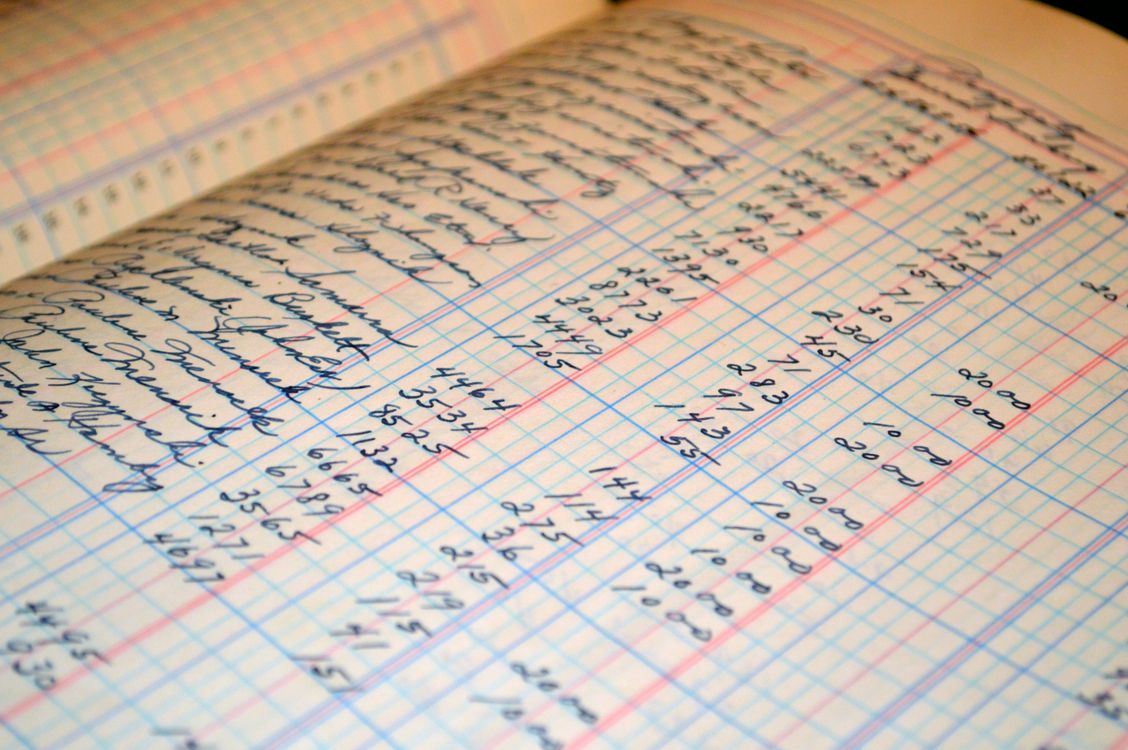
These models work — barely — under 30 students. Above that line, three things start to fail at the same time. The notebook drifts out of sync with the bank account. The owner can't tell which student is two months behind. And the testing fees, which weren't part of the recurring charge anyway, start to vanish.
From my own dojo: When I asked my students how they'd prefer to pay, two-thirds said "I'll just bring cash to class." That answer is why so many dojo owners spend Sunday evenings reconciling a paper ledger that someone forgot to update on Tuesday.
The wider small-business data backs this up. 56% of small businesses report being owed money from unpaid invoices, averaging €17,500 per business (Intuit QuickBooks, 2025). The notebook is just the dojo-shaped version of that problem.
7 signs your dojo has outgrown Excel
What Does Dojo Payment Collection Actually Involve?
Dojo payment collection covers five operational areas: collecting mandates (permission to charge), running recurring billing cycles, recovering failed payments, choosing payment methods (cards, SEPA, cash), and protecting revenue from leakage. The combined cost of running this manually is a 12-percentage-point gap between cash collected and cash billed — the exact gap ABC Fitness documents across its network of 30,000+ fitness locations processing €12 billion in annual transactions (ABC Fitness, 2026).
Why is martial arts billing harder than generic gym billing? Three structural reasons:
- Belt testing fees that don't fit a flat monthly subscription
- Family billing — one mandate covering two or three children in different classes
- Kids' and adult programs billed at different rates, sometimes with a separate competition-team fee
The five-pillar framework: Most vendor articles jump straight to "buy automation." The real problem is that dojo payment collection is five distinct jobs stitched together. Software that solves one (recurring charges, say) but leaves the others manual still leaves the owner running the notebook on Sunday night. Look for tools that close all five, not just the loudest one.
The good news: this is mostly a one-time switching cost. Once mandates, billing cycles, and dunning are configured, the system runs itself for years. The bad news: the typical dojo owner has never set up any of these things, and every step has its own jargon. The rest of this guide walks you through each pillar in order.
Complete Guide to Dojo Management
How Much Should European Dojos Charge, and How Should They Bill?
A primary-source survey of 70+ Aikido dojos across 18 European cities (May 2026) found typical adult monthly tuition clusters between €33 and €65, with Zurich and London at the top end (€85–€110) and Vienna and Paris at the bottom (€16–€42). The European median is €40–€55 per month — roughly half of the published US benchmark of $140–$185 per student. European dojos can't absorb US-priced software margins or US-style payment-failure leakage.
This matters for pricing strategy. If you're a Berlin dojo benchmarking yourself against US numbers, you'll talk yourself into raising prices to a level no parent will accept. The European reality is different, and so is the math behind it.

Three structural billing patterns show up across the dataset. UK and Dutch dojos almost always sell a monthly flat fee. French, Italian, Austrian, and many Spanish dojos sell an annual season ticket billed September–June. Scandinavian dojos sell by semester. Each pattern has different cash-flow implications: the season ticket front-loads cash but commits you to a refund policy; the monthly model smooths revenue but exposes you to involuntary churn every month.
Our 18-city EU survey is the first piece of primary-source pricing data in this market that I've seen published. Every existing vendor benchmark I checked — including the most-cited one, the BlackBelt CRM 2026 Business Benchmark Report — draws only on US andCanadian schools and doesn't disclose its sample size. Treat US numbers as directional. Use this table for European decisions.
Here's the full 18-city dataset. All prices are adult monthly fees in EUR, read directly from each dojo's own website in May 2026. Where dojos publish only annual or semester fees, the monthly equivalent is calculated by dividing across the typical Sep–Jun training year.
| City | Country | Typical adult monthly (EUR) | Range observed | Notes |
|---|---|---|---|---|
| Zurich | CH | €95–€110 | €65–€110 | Highest in dataset; CHF 80–100/mo is the cluster |
| London | UK | €75–€90 | €46–€139 | Unlimited monthly + £30–£60/yr admin fees |
| Bucharest | RO | €67–€96 | €67–€172 | €172 outlier is multi-discipline gym, not pure Aikido |
| Hamburg | DE | €55–€65 | €27–€65 | Commercial dojos cluster €55–€65 |
| Sofia | BG | €51–€65 | €26–€65 | Two-tier: commercial dojos vs community clubs |
| Madrid | ES | €50–€55 | €40–€85 | Most cluster €50–€55 |
| Berlin | DE | €45–€70 | €12–€70 | Bimodal: sport-association €12–€20 vs dedicated dojos €45–€70 |
| Stockholm | SE | €36–€74 | €14–€124 | Iyasaka €124/mo is outlier (annual prepay ≈ €34/mo) |
| Milan | IT | €40–€50 | €40–€70 | Annualised; +€35/yr Aikikai d'Italia license |
| Amsterdam | NL | €35–€55 | €33–€70 | Chu Shin €70 unlimited at ceiling |
| Prague | CZ | €33–€53 | €14–€53 | Renmei €14/mo is Sokol community structure |
| Copenhagen | DK | €27–€50 | €27–€50 | Pricing transparency weak; 3 of 5 dojos hide fees |
| Oslo | NO | €34–€51 | €34–€51 | Semester billing dominant |
| Budapest | HU | €42–€50 | €33–€55 | Tight cluster |
| Warsaw | PL | €47–€54 | €47–€54 | Unlimited training included |
| Lisbon | PT | €40–€60 | €40–€60 | Only APASD publishes full prices; market opacity high |
| Vienna | AT | €16–€52 | €16–€52 | Aikido Union Wien €16/mo unlimited is dataset low |
| Paris | FR | €33–€42 | €33–€71 | Annualised from €300–€400/yr; most cluster €33 |
Source: 70+ dojo pricing pages read in May 2026. Full list of dojos at the end of this article. Currency conversions use ECB reference rates, May 2026.
Should You Use SEPA Direct Debit, Card Billing, or Both?
For European dojos, SEPA Direct Debit is the higher-reliability option: SEPA reaches a 99.78% success rate with professional failure management, compared to a 10–16% decline rate for card billing in the fitness industry (Twikey, 2022; Host Merchant Services, 2026). Cards still belong in the stack — they're the default for tourists, drop-ins, and short-term memberships — but for monthly tuition in Europe, SEPA wins on math.
The scale of SEPA is easy to miss when you live in the US-built software bubble. Direct debit accounted for 14% of total payment volume in the euro area in the first half of 2025, with 11.3 billion transactions worth €5.6 trillion (ECB, 2025). It's not a niche European method. It's the dominant way households pay recurring bills.

The reliability gap is wide enough to chart:
What does a 12% card decline rate cost in practice? A 100-student dojo processing €4,500 of monthly tuition at 12% declines loses roughly €540 every month, or €6,480 a year — before any recovery effort, and on top of any cash leakage (Fitness Payment Services, 2026). That's enough to buy new equipment.
So when does each method belong in the stack? SEPA Direct Debit for monthly tuition, card-on-file for short-term and ad-hoc charges (drop-ins, retail, seminars), and cash only if you genuinely can't avoid it. "Cash only" is a €5,000–€10,000-a-year cost-of-friction at any reasonable dojo size in Europe.
Why Do Payments Fail, and How Do You Recover Them?
Roughly 50% of subscription churn comes from failed payments rather than cancellations — and the failures aren't random. 34% are insufficient funds, 15% are expired cards, and the rest split between bank declines, fraud blocks, and technical errors (Recurly, 2025; Razorpay, 2026). The good news: 85% of failed payments are recoverable with a clean retry sequence and fast follow-up.
How does recovery actually work? It's called dunning, and it's mostly invisible if you set it up right. When a payment fails, the system waits 3–5 business days, retries automatically, and emails the parent if the second attempt also fails. SEPA scheme rules cap retries at two, so the window is short. Card account-updater services refresh expired card numbers behind the scenes without bothering the parent.
Effective dunning recovers 45–70% of failed transactions, and the best automated systems pull back up to 89% of initially failed charges (Host Merchant Services, 2026). ABC Fitness's network data makes the case in revenue terms: moving from an 85% to a 97% collection rate adds €120,000 to the bottom line of a €1 million revenue business (ABC Fitness, 2026). For a dojo running €60,000 a year, the same 12-point shift is worth €7,200.
The timing matters as much as the retry logic. Recurly's data shows retries scheduled for payday windows recover meaningfully more than retries fired at random intervals. If your software doesn't let you configure the schedule, it's leaving money on the table.
How Do You Handle Belt Testing Fees and One-Off Charges?
Belt testing happens every two to three months in most schools and is the single most commonly missed billing event in martial arts — students test, get promoted, and the fee gets forgotten or invoiced late. The same pattern shows up in vendor benchmarks across the industry (BlackBelt CRM 2026, vendor-reported, US-market). Building testing fees into the recurring billing system, rather than collecting cash on test day, closes the largest single revenue leak in a small dojo.

There are two clean patterns, and both hinge on the fact that the exam itself costs nothing — the fee is owed only when a student passes and moves up a belt.
The first pattern is cash on the day. Promotion decisions are usually made on the spot at the test, so collecting in cash right then works — but it's the dojo-equivalent of running a restaurant with an open till: nothing reconciles itself, and it leans entirely on memory.
The second pattern is to charge at the moment you update the belt on the member roster. The promotion is the billing trigger: when you move a student to the next rank in the system, the corresponding fee fires automatically — card or SEPA, with the invoice issued for you. This is the preferred approach, because you set the fee per belt once and never have to remember the right amount, raise an invoice by hand, or kick off a payment manually.
The belt-testing billing gap is usually presented as a discipline problem ("the owner needs to remember to invoice"). It's actually a system-design problem. Belt promotion lives at the intersection of the curriculum module and the billing module. If your software keeps those two pieces separate, the gap reopens every grading cycle no matter how disciplined you are.
The same logic applies to other one-off charges. Seminar fees. Uniforms. Summer camp deposits. Each one is a separate revenue line that lives or dies depending on whether it touches the billing system automatically.
Schools using automated payment collection see 25% more consistent cash flow than schools running manual billing (Martialytics, 2026). For belt testing specifically, automation isn't an optimisation. It's the difference between collecting the fee and forgetting it.
Tying Belt Progression to Billing
How Do You Protect Revenue from Leakage and Late Payments?
55% of European B2B invoiced sales are overdue, and small businesses owed money report an average of €17,500 in outstanding invoices (Intuit QuickBooks, 2025; Caine & Weiner, 2025). For a dojo, the equivalent leakage shows up as the gap between enrolled-revenue and collected-revenue — and the cash-and-paper-log model typically widens that gap to 15–25%.
Think about that for a 100-student school. At €45 average tuition, you're billing €4,500 a month, or €54,000 a year. A 20% gap is almost €11,000 lost — without a single student deciding to quit. That money funded itself out of your roster, and the only sign on the surface was an empty seat on the mat.
So what closes the gap? Four things, in order:
- Visibility. A dashboard that shows collected revenue and enrolled revenue side by side, every month. If you can't see the gap, you can't close it.
- Automated reminders. A polite email at 7 days overdue, a firmer one at 14, an access pause at 30. The cadence does most of the work without an awkward conversation.
- Membership freezes that aren't cancellations. A parent whose child has a six-week injury shouldn't have to cancel and rejoin. Frozen members are still members.
- Role-based access. Instructors see attendance and belt status. They don't see who owes what. That's both a teaching-focus issue and, in many EU jurisdictions, a GDPR best practice.
This is also where the gym-industry benchmark anchors the conversation. The average gym loses €5,000–€25,000 a year to membership churn, with involuntary churn (failed payments) accounting for 20–40% of that total (HFA via Smart Health Clubs, 2025; Razorpay, 2026). For a small dojo on cash and notebook, the absolute numbers are lower, but the percentages are usually worse.
What Should You Look For in Dojo Billing Software?
The features that matter most for European martial arts billing, in priority order, are SEPA Direct Debit support, automated retry/dunning with configurable schedules, family billing under one mandate, testing fee and event-ticket support tied to the belt module, and overdue-payment dashboards with role-based access. Anything else is a nice-to-have. Direct debit alone accounts for 14% of total payment volume in the euro area, and Stripe-only billing locks out that entire channel (ECB, 2025).
Here's a checklist you can use when comparing vendors. The first five are non-negotiable for an EU dojo. The next three matter once you're past 50 students.
- SEPA Direct Debit (B2C) mandates with retry and recovery built in
- Card-on-file as a parallel option for drop-ins and tourists
- Family billing — one parent mandate, multiple children, one invoice
- Belt testing fees auto-billed on promotion-event creation
- Overdue-payment dashboard with the collected-vs-enrolled gap visible
- GDPR data residency in the EU (critical for child membership data)
- Role-based access so instructors don't see payment status
- CSV import from the cash-and-notebook system you're migrating from
What about pricing? US-built tools commonly charge $95–$149 per month for a 100-student school. For a European dojo billing €4,500 in monthly tuition, a 30% software-to-revenue ratio is unworkable. Aim for under 5% to make your economics work.
A practical filter. If a vendor's pricing page is denominated only in USD, they're probably not built for EU billing reality. If they list "SEPA" as a feature but you can't find documentation on how mandates are stored, retried, or revoked, treat that as a no. SEPA done badly is worse than not offering it at all.
How Much Dojo Software Costs in 2026
Free vs Paid Dojo Management Software
Frequently Asked Questions
What is the most common way martial arts schools currently collect payments?
For small traditional dojos — especially in Aikido, Karate, and Judo — the dominant method is still cash collected at the front desk and recorded in a paper notebook or basic spreadsheet (Member Solutions, 2025). Larger and US-style commercial schools run on autopay more often, but adoption varies dramatically across the industry.
What is the most reliable way for a European dojo to collect monthly tuition?
SEPA Direct Debit, with a 99.78% success rate when professionally managed (Twikey, 2022). Cards see a 10–16% decline rate in the fitness industry, so SEPA cuts involuntary churn roughly 10x for EU schools. Most European dojos should run SEPA as the primary method and keep cards available for drop-ins.
How much revenue does a typical European dojo lose to failed and missed payments?
A 100-student European school at €45 per student per month runs €4,500 of monthly recurring revenue. Cash plus paper log typically leaks 15–25% of that (€8,100–€13,500 per year). Card-only billing without recovery adds another 10–16% in involuntary churn (Host Merchant Services, 2026).
How many times can you retry a failed SEPA direct debit?
Under SEPA scheme rules, a debit can be retried up to two times. Best practice is to wait 3–5 business days after a failure before retrying, and to align the retry with the parent's typical pay date (Recurly Docs, 2025). Beyond two retries, the system should escalate to a manual reminder.
What's the simplest way to collect belt testing fees without forgetting them?
Tie the testing fee to the promotion event in your software, so the charge is generated automatically when the test is scheduled. Manual cash collection on testing day is the single most common revenue leak in martial arts schools. Auto-billing eliminates the reconciliation step entirely and produces a clean audit trail.
Getting Started
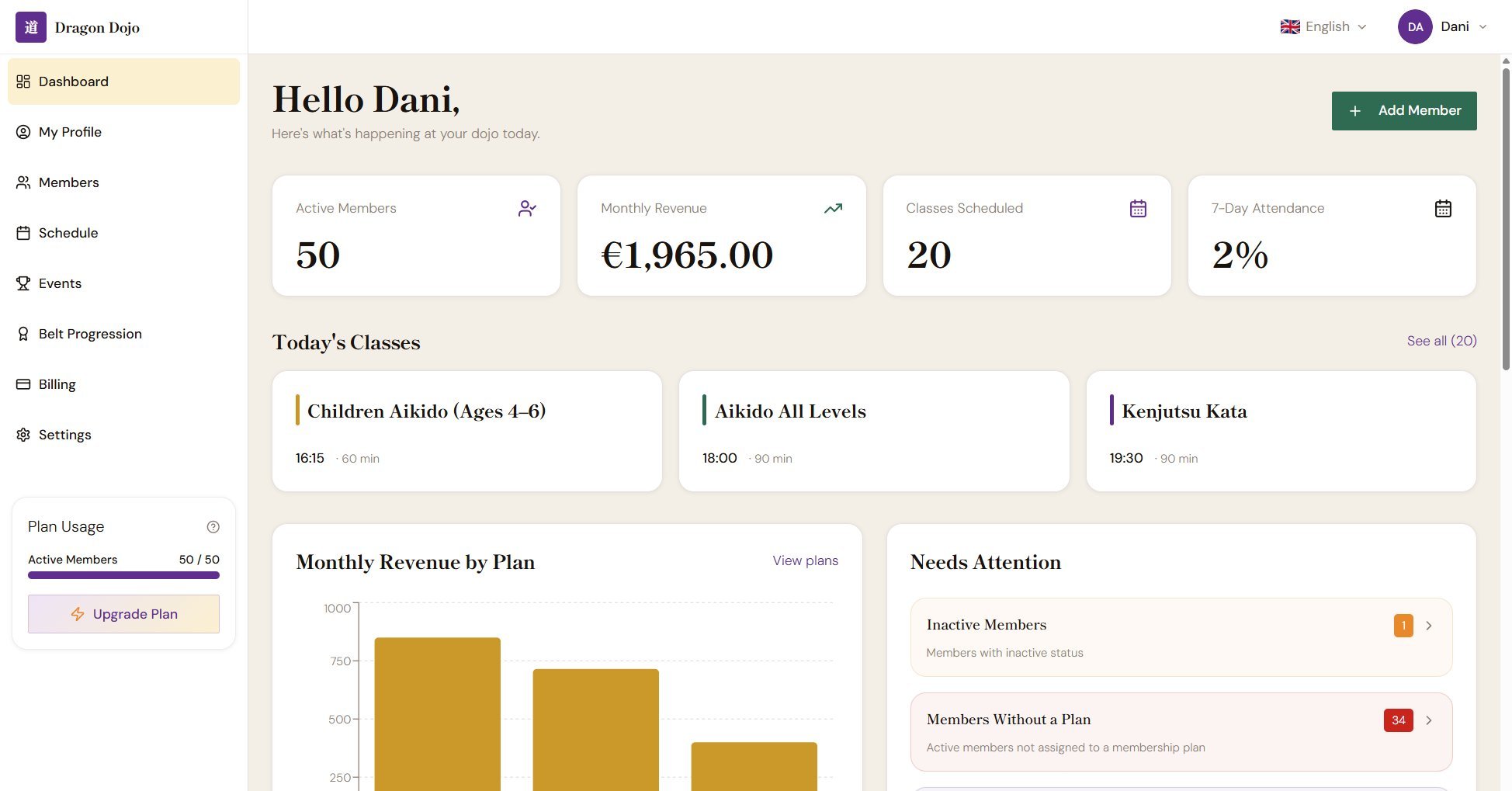
Step 1: Measure your current leakage. For one month, write down enrolled revenue (your roster × tuition rate) and collected revenue (what actually hit the bank). The gap is your starting number. Most owners are shocked the first time they do this.
Step 2: Choose your primary method. If you're in the EU, set up SEPA Direct Debit. Keep cards as a secondary option. Cash should be the exception, not the rule.
Step 3: Migrate one cycle at a time. Don't try to switch all 100 students at once. Move 10–20 per month, starting with the parents most likely to say yes. The notebook can run alongside the new system for one billing cycle, then it goes in a drawer.
DojoMaster supports SEPA Direct Debit natively (one of the only dojo platforms that does) and automates the full billing-and-recovery flow. Start free for up to 20 members at dojomaster.app — no credit card needed.
Continue Learning
In-depth guides:
Comparisons:
- How Much Does Dojo Management Software Actually Cost?
- Free vs Paid Dojo Management Software
- Cost of Running a Martial Arts School
Sources
Payments, billing, and industry data:
Recurly — Failed Payments Survey · Recurly Docs — SEPA Retries · Razorpay — Reducing Churn in Recurring Payments · Host Merchant Services — Gym Billing System 2026 · Host Merchant Services — Card Declines in Fitness · Twikey — SEPA Direct Debit Scheme Guide · ECB — Payments Statistics H1 2025 · ECB — Euro Reference Exchange Rates · Intuit QuickBooks — 2025 Small Business Late Payments Report · Caine & Weiner — Invoice Delays · Fitness Payment Services — Gym Member Churn · ABC Fitness — Hidden Revenue Leaks · Smart Health Clubs — 100 Gym Retention Statistics 2025
Martial arts industry sources:
Martialytics · Member Solutions — Software for Aikido Dojos · BlackBelt CRM Business Benchmark Report 2026 (vendor-published, US/CA/PR scope, no disclosed sample size)
Primary-source dojo pricing pages — adult Aikido tuition across 18 European cities, read May 2026:
Berlin: Tanden Aikido · Aikido Vereinigung Berlin · Ki & Aikido Dojo Berlin · Aikido Berlin Steglitz · Aikido-Spandau im PSV
Hamburg: Aikidozentrum Hamburg · Aikido Schule Hamburg · Aikido Trainingsgemeinschaft Hamburg · Ki & Aikido Hamburg · Aikido-Taiji-Hamburg
Vienna: Aikido Union Wien · Aikido Dojo Shumeikan Wien · Wiener Aikikai Union · Musubikan Aikido Dojo · Sobukan Union Wien
Zurich: Kokoro Dojo Zürich · Aikido Seishinkan Zürich · Aikido-Atelier · Aikido Zürich · Aiki-Kai Zürich
Copenhagen: Frederiksberg Aikido Klub · Copenhagen Aiki Shuren Dojo
Oslo: Oslo Aikidoklubb · Sentrum Aikido · Tenshinkan Aikidoklubb · Skøyen Aikido Oslo
Stockholm: Stockholms Aikidoklubb · Stockholm Aikikai · Iyasaka Aikidoklubb · Vanadis Aikidoklubb · Ikigai Aikidoklubb
Amsterdam: Aikikai Aikido Amsterdam (Yuwakai) · Aikido Yawara · Tom Dijkman Aikido Amsterdam · Chu Shin Aikido Dojo Amsterdam · Kishinkai Aikido Amsterdam · Sho Shin Aikido Dojo · Mindfulness Amsterdam
Paris: Ki Aikido Paris · Aïkido Paris Temple · Association Tenchi · Paris Aïkido Club · Aïkikai Paris Batignolles · Championnet Sports · APA.9 · Cercle Omnisports Paris Centre · Aïkido Club Parisien
London: London Aikikai · Isshinkai London · North London Aikido · Aikido Gyodokan · Aspire Aikido London · Pinner Aikido Club
Madrid: Escuela Mizu Aikido · Aikidomadrid.com · El Dojo Madrid · GMadrid Sports · Dojo Zentrum Madrid
Milan: ShobuAiki · Centrolistico · Scuola della Respirazione · Shinrai Aikido · Jigoro Kano Milano
Lisbon: APASD Aikishurendojo · Aikido Dojo da Luz
Warsaw: Warszawskie Centrum Aikido · Warszawska Sekcja Aikido · KYODŌ Ursynów
Prague: Aikido Ikeda Dojo Praha · Aikido pro každého · Aikido Klub Praha (Břevnov) · Aikido Karlín · Aikido Praha Sekai Dojo · Aikido Renmei Praha
Budapest: Kyojun Aikido-Iaido Dojo · Aikido Tenjinchi Dojo · Zumm Aikido Egyesület · Misogi Gazdagrét Aikido · Szeltner Aikido Dojó · Hikari No Aikido Dojo
Bucharest: Academia Aiki Seishin Ryu · Dumkan Aikido · Aikirodac · Seishin Dojo · Aikibudo / Art Dojo
Sofia: Tendokan Aikido Dojo · Aiki School (Aikikai Aikido School) · Aikido Klub Takumi
Written by Daniil Pavliuchkov, 4th dan Aikido Aikikai and founder of DojoMaster. Built with primary data from 70+ dojo pricing pages, the European Central Bank, the Health & Fitness Association, ABC Fitness, Recurly, Twikey, Razorpay, and Intuit QuickBooks.