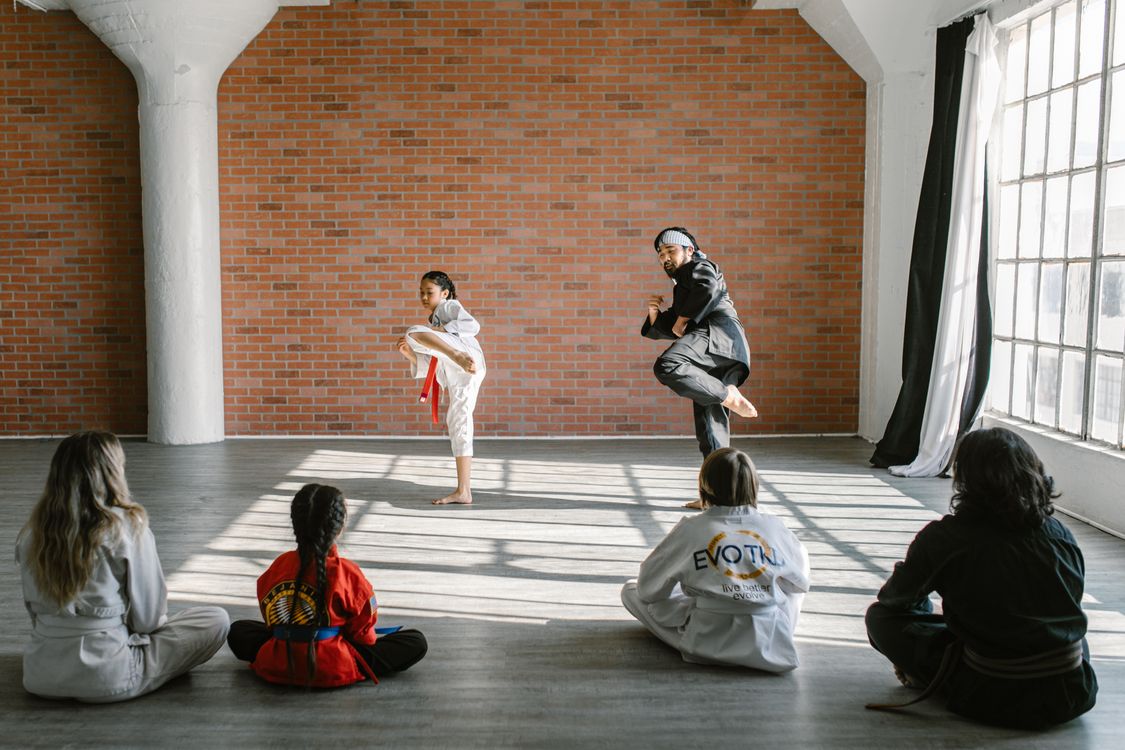
A parent sits on the bench at the side of your mat for forty-five minutes, twice a week, for three years. In that time most dojo owners will speak to them properly maybe four times: at signup, at the first grading, once about a missed payment, and once when the child stops coming.
That last conversation is usually the first time anyone asks what the parent was thinking. By then it is a goodbye, not a conversation.
This guide covers what parents of martial arts students actually want to know, how often to tell them, and which channel to use without getting into trouble over data protection. It also explains why two numbers you have probably heard from software companies are fake.
Key Takeaways
- Get parents to come and watch. In a 2025 survey of US children, 86% of those still playing sport had a parent who came to games and practices, against 58% of those who had quit (Aspen Institute Project Play, 2025).
- Watch ages 12 to 14 most closely. Children who quit sport stop at about 13 on average, and more than a third of them quit at 12, 13 or 14 (Project Play, 2025).
- Send each family one sentence about their child, at least once a month. In a US school study, short weekly notes from teachers to parents cut the share of students who failed a course from about 16% to about 9% (Kraft & Rogers, 2015).
- Stop believing two popular numbers. "70% of kids quit sport by 13" has no study behind it. A "98% SMS open rate" cannot be measured, because a text message cannot tell you it was read.
- Keep announcements out of WhatsApp groups. Every parent in the group can see every other parent's phone number. A German data protection authority points school parent councils to email and says any messenger group must be voluntary (Hessen data protection authority, 2024).
If you are setting up the rest of your school's admin at the same time, this sits inside the wider picture in the complete guide to dojo management.
Start by Finding Out What Parents Already Do Not Know
Before you change what you send, find out what parents are actually missing. It is usually not what owners expect. Owners expect parents to want more schedule information. Parents mostly want to know whether their own child is doing well.
In a survey of 1,050 US families with school-age children, 77% said hearing from the school mattered to them, and 33% still felt they did not know how their own child was doing (SchoolStatus, January 2024). That is a third of your parents sitting on the bench watching a class they do not understand.
SchoolStatus sells messaging software to schools, so read its figures as a company survey, not independent research. There is no research on parents in martial arts schools specifically, so this guide draws on youth sport research and US school data (K-12, meaning kindergarten to 12th grade, roughly ages 5 to 18).
Here is how to find your own gap:
- Pick five current parents and five who left in the past year. Not your most involved families. The quiet ones.
- Ask the ones who left one question: "What would you have wanted to know that you did not?" Do not defend anything. Write down the answer.
- Ask the current parents: "If a friend asked what your child is working on right now, what would you say?" If they cannot answer, that is your gap, and it is the most common one.
- Look at the messages you sent in the last three months and sort them into two piles: admin (schedules, closures, invoices) and progress (what this particular child is doing). Most dojos find the second pile empty.
Children Who Keep Training Have Parents Who Watch
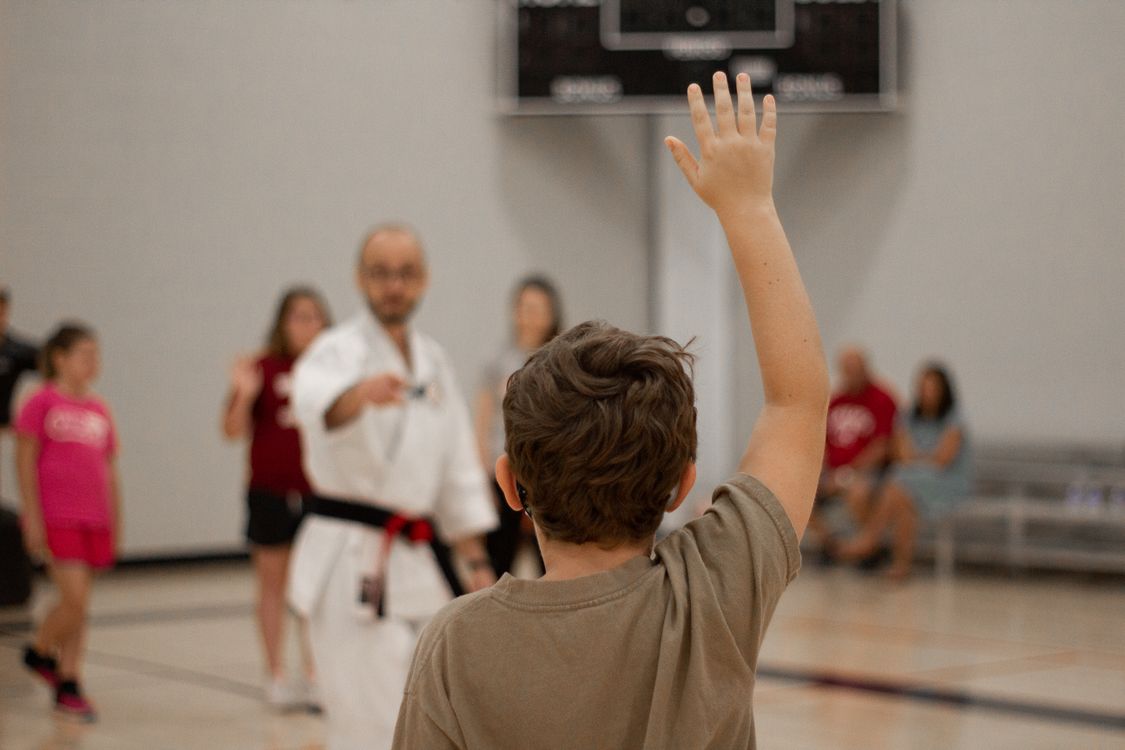
The strongest finding in recent youth sport research is about parents being there, not about messages. In a December 2025 survey of 3,827 US children aged 10 to 17, 86% of those still playing organised sport had a parent who came to their games and practices. Among children who had quit, it was 58% (Project Play, December 2025). The same survey found that 21% of children who had quit had felt pushed to play when they did not want to, against 9% of those still playing. And 18% of those who quit said their parents compared them to other children, against 13% of those still playing.
Put together, this changes your job. You are not trying to sell the dojo to the parent. You are trying to get them to come and watch, and then tell them something specific about how their own child is doing.
The same survey asked children why they play. Having fun came top at 48%, playing with friends was close behind at 47%, and winning a sports scholarship to university was only 12%. Asked what they had disliked, 29% of the children who quit said "I'm not good enough" and 21% said bad coaching.
If a parent sees your dojo as "a place where my child is being ranked," you will lose that child sooner or later, and no newsletter will fix it. Changing that picture is a communication job, and it is closely tied to how you handle belt progression as a retention tool.
Stop Believing These Two Fake Numbers
Both of these turn up in most articles on this topic. Neither holds up when you look for the source.
"70% of kids quit sport by age 13." There is no study behind it. Marty Fox of the Aspen Institute and Joseph Janosky of Lasell University traced the figure back nearly forty years and never found any original research (Tucson.com). The real numbers come from the survey above. Children who quit sport stop at about 13 on average, and more than a third of them quit at 12, 13 or 14. That is more useful than a scary headline, because it tells you when to pay attention.
"98% SMS open rate." A text message cannot tell the sender whether it was read. The phone network can confirm that a message reached the phone, and that is all. So nobody can have measured this number, and no study is ever named alongside it.
Email "open rates" are not much better any more. Apple Mail can load emails in the background as soon as they arrive, so they count as "opened" whether or not anyone looked (Apple). Because of this, M+R Benchmarks, a long-running yearly report on charity email, no longer reports open rates at all (M+R Benchmarks 2026).
For a dojo, the lesson is simple: stop counting opens. Count replies, and count who turns up. Those are the two numbers that mean something, and you already have both. If your attendance tracking is in good shape, the second one is already in your system.
What Actually Works: One Sentence About Their Child, at Least Once a Month
The best evidence on teachers messaging parents comes from a study by Matthew Kraft and Todd Rogers, published in 2015. High school students in a US summer programme for retaking failed courses were split by lot into three groups. In the first, parents got no messages. In the second, the teacher sent parents a one-sentence weekly note about something their child was doing well. In the third, the weekly note said what their child could improve.
The weekly notes cut the share of students who failed the course from about 16% to about 9% (15.8% to 9.3%), a drop of 41% (Kraft & Rogers, Economics of Education Review, 2015). Most of that came from students staying in the programme who would otherwise have dropped out. That is the part that matters for a dojo: the notes kept students from quitting.
Here is the part most people get backwards. The notes that helped most were the ones about what the child could improve, not the ones praising what they did well. The improvement notes were also more often specific and gave the parent something to act on (Education Next). The lesson is not "send more happy photos." It is that one specific sentence about the child, pointing to what comes next, beats silence.
The teachers in that study wrote every week. With 20 children in a class, a weekly note for every child is not realistic for a dojo, so aim for one note per child at least once a month. A good note is one line and takes about fifteen seconds to write:
- "Mia's breakfalls are much smoother this month. Next we're working on not putting her hand down when she lands."
- "Tom has the first three moves of the form down. The turn at the end is the bit to practise before December's grading."
- "Sam spent most of tonight helping the newer white belts. Honestly, that matters to me more than the technique."
Each of those tells the parent something they could not see from the bench, names the child, and points forward. None of them needs a newsletter.
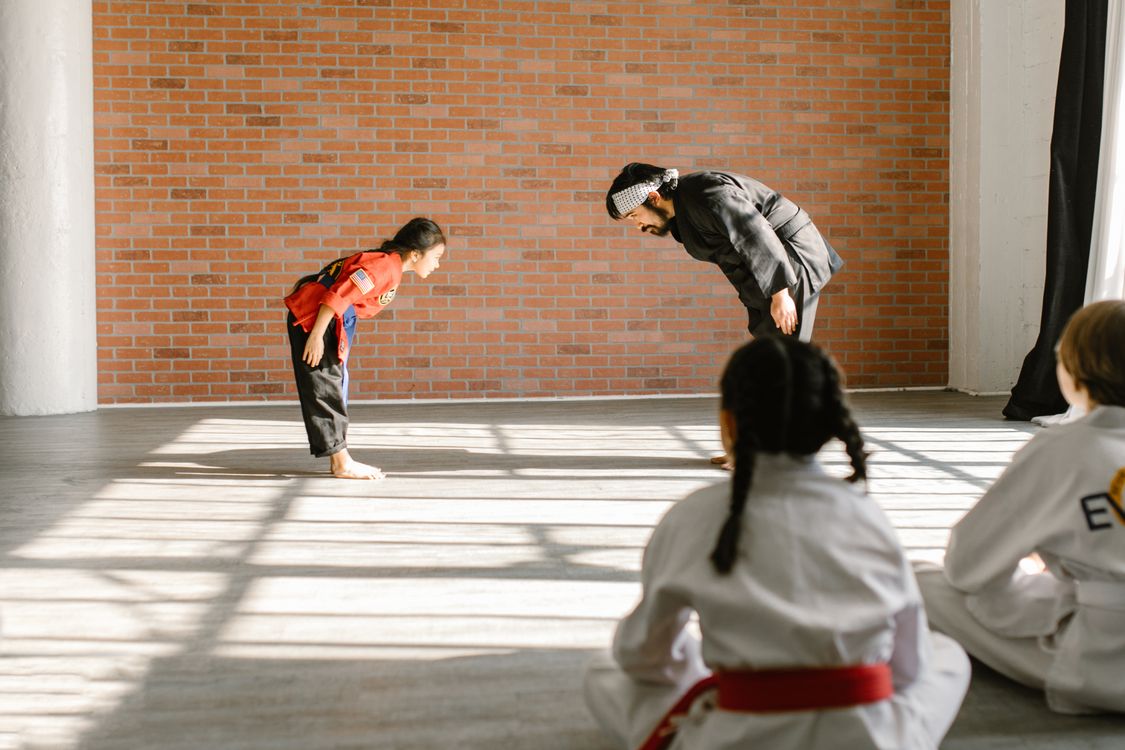
From my own dojo: I ran a 40-student Aikido school out of a Google Sheet and Stripe invoices for two years before I built anything, and I only ever wrote to parents when something came up. I wrote when a payment bounced and when a grading date moved. Both of those are bad news or admin. A parent who only hears from you about invoices has been told, four times a year, that they are just a customer. I did not learn that from research. I learned it from seeing who left.
How Often Parents Want to Hear From You
More often than you think. In the same survey of 1,050 US school families, 48% wanted to hear from their child's school every day and 21% every week. Almost half (45%) said they did not hear from the school often enough (SchoolStatus, January 2024).
Every day is not realistic for a school where each child trains twice a week, and you should not try. A rhythm that works for a dojo without wearing you out:
- Within 24 hours, for anything unusual: an injury, a changed grading date, anything a parent might otherwise hear first from another parent.
- At least once a month, to each family: one sentence about their child. Spread the notes over the month, a few after each class, so they never pile up.
- At least once a quarter, to everyone: schedule, gradings, closures, and one thing the whole class is working on.
- Twice a year, in more detail: a short written note on where the child is on their path and what comes next. This is the one parents remember, and it fits with how you already track belt promotions.
Choosing a Channel Without Creating a Data Protection Problem
Each channel does a different job, and most dojos are best served by two of them, not all of them.
What German data protection authorities say about messenger groups
The WhatsApp row is the one European dojo owners argue with, so here is where it comes from. In October 2024, the data protection authority of the German state of Hessen set out what a messaging app used by school parent councils should offer. It must work without reading the phone's contacts. It must not use the data for advertising or pass it to other companies. Messages must be encrypted so that even the app company cannot read them. It must be possible to sign up without a mobile number, and to delete your data completely. The authority points to email as the channel to use, and says joining a messenger group must be voluntary: a parent who stays out must not lose out, and anything shared in the group must also be available another way (Hessen data protection authority, 14 October 2024). The Baden-Württemberg authority has taken a similar line on teachers using WhatsApp since at least 2017 (LfDI Baden-Württemberg).
These rules were written for schools, not private dojos, so they do not bind you directly, but they show how German regulators think about children's groups. The practical reason to move announcements off WhatsApp is simpler: every parent's phone number is visible to every other parent, and you cannot delete a message from someone else's phone.
In the US, the rules depend on what the text says
US dojo owners face a different rule in the same place, and it is not about data protection. If you send automated texts to parents, the federal rules come from the Telephone Consumer Protection Act (47 CFR 64.1200). They look at two things together: how the text is sent, and what it says. An automated text to a mobile phone that advertises or sells something needs the parent's written permission in advance. An automated text that only gives information needs their permission, but not in writing.
A text saying tonight's class is cancelled is information. A text promoting your summer camp to the same parent is advertising. Keep them in separate messages: the FCC, which enforces these rules, has long treated a message that does both as advertising, so one line about the camp in a schedule text puts the whole text under the stricter rule. The phone networks add their own requirement on top. Before you send texts from software over an ordinary phone number, you have to register your business and the kind of messages you send (this is called 10DLC registration), or many of them will not arrive.
This is a summary of published rules and guidance, not legal advice; check the rules where you teach before you change how you collect or use family data.
You do not need consent to message families about classes
One more point that many articles on this topic get wrong. Under the GDPR, you do not need a family's consent to message them about lessons, schedules and gradings. Those messages are part of the service they signed up for, or something you have a legitimate reason to send (GDPR Article 6). Marketing to the same parents is different, and that is where consent rules come in. A consent checkbox for class-cancellation texts is extra work you do not need. Who in your school can see which parts of a family's record is a separate question, covered in dojo instructor access control.
The Age Rules Differ by Country, Including Within the EU
If you use the same online signup form in Munich and Chicago, the age at which a child can agree to it without a parent differs by three years.
The EU ages are as listed in the euCONSENT overview of EU countries. "Europe" is not one answer here: inside the EU the age covers the whole range the GDPR allows. Denmark and Sweden use the same age as the US, while Germany and Ireland are three years higher. If you teach in more than one country, check each one.
Under the GDPR, the default age is 16, and EU countries may lower it to no less than 13. You also have to make a reasonable effort to check that the permission really came from a parent (GDPR on EUR-Lex). In the US, COPPA covers businesses running websites or apps aimed at children under 13, which can include a dojo's own app or online signup form, and requires a parent's permission, in a way you can check, before you collect a child's details (FTC).
One US myth while we are here: FERPA, the US law on school records, does not apply to a private martial arts school. It only covers schools and colleges that receive money from US Department of Education programmes, which a dojo does not (US Department of Education).
What to Say, and What Not to Say
The difference between a message that builds trust and one that quietly damages it is usually being specific and pointing forward, not being warm.
Say this:
- "Ella was the only one who got the right timing of the throw tonight. Keep it up!"
- "Heads up regarding the grading: Jonas is close to being ready to grade, but I don't think he is now. He still mixes up some techniques but if he comes regularly he will be in top shape for the next grading in May."
- "Quick one: Ben had a tough session tonight and got frustrated with himself. Nothing happened and he's fine. I'll keep an eye on it in the next class."
- "The class is working on breakfalls this month, so you might see a bruise or two. That's a normal part of learning to fall safely. Let me know if you have any concerns."
Not this:
- "Great class today!" Sent to everyone, it says nothing about anyone's child, and parents learn to skim your messages.
- "Ella is doing much better than the other beginners." Comparing a child with others is one of the things the survey linked with quitting. Do not set that example for the parent.
- "Just a reminder that fees were due on the 1st." If that is the only message that month, the relationship is now about money. Keep money in its own message at its own time.
- "Jonas isn't ready to grade." True, unhelpful, and it lands as a final verdict with no way forward. Always add the next step.
- "We need to talk about Ben's behaviour." Sent by text, with no detail, at 9pm. The parent now has a whole evening to imagine the worst. If it needs a conversation, ask for one and say roughly what it is about.
The general rule: name the child, describe something you saw, point forward, and never give a verdict without a next step.

Common Mistakes to Avoid
1. Only contacting parents when something is wrong. This is how most dojos run, mine included for two years. Every message a parent has from you is an invoice or a problem. Fix it by making the monthly note about each child part of your routine instead of waiting until you feel like it.
2. Treating a group message as communication. A newsletter to 80 families tells no family anything about their own child. Group messages handle logistics. They do not build the relationship. You need both, and the note about each child is the one dojos skip.
3. Letting the parent group chat become the place for announcements. Once schedule changes live in a group chat, any family not in it is left out, which is exactly what the Hessen guidance warns against. Announce by email or text, and let the chat be social.
4. Talking to parents about technique instead of about their child. Parents do not need the Japanese name of the technique. They need to know whether their child is doing all right and what happens next.
5. Not paying attention to children going through puberty. More than a third of children who quit sport do so at 12, 13 or 14, when most of them are going through puberty. It is also when many parents stop watching class, because the child no longer wants them there. Attendance drops, then contact drops, then the child is gone. Watch these students more closely: notice when one starts missing classes or loses interest, talk to them early, and keep their parents informed. The wider advice in the complete guide to student retention applies here too.
Frequently Asked Questions
What do parents of martial arts students most want to know?
Whether their own child is doing all right, and what comes next. In a survey of US school families, 77% said hearing from the school mattered to them, but 33% still felt they did not know how their own child was doing. Youth sport research also finds that children play for fun and friends, not for results. Schedules and invoices are necessary, but they are not what parents are missing. A specific sentence about their child, sent regularly, is worth more than a polished newsletter.
How often should a dojo contact parents?
Aim for a one-sentence note about each child at least once a month, a message to everyone with schedules and news at least once a quarter, and a more detailed progress note twice a year. Parents usually want to hear more than schools send: in a survey of US school families by a company that sells school messaging software, 48% wanted daily updates and 45% said they did not hear from the school often enough. Daily is not realistic for a dojo, and with 20 children in a class neither is a weekly note for every child, but one note per child a month is, and each one takes about fifteen seconds.
Is a WhatsApp group a good way to communicate with dojo parents?
It is fine for parents to chat, but a poor place for announcements. Every member's phone number is visible to every other member, you cannot delete a message from someone else's phone, and a family that does not join misses anything announced there. In October 2024 the data protection authority of the German state of Hessen set out what messaging apps used by school parent councils should offer, including working without reading the phone's contacts, encryption the app company cannot break, and sign-up without a mobile number. It pointed to email as the channel to use. Those rules were written for schools, so they do not bind a dojo directly, but they are the clearest guidance available.
Do I need parents' consent to message them about classes?
Generally no, not for everyday messages. Under the GDPR, messages to a family about their child's lessons, schedules and gradings are part of the service they signed up for, or something you have a legitimate reason to send. Consent comes in for marketing, which is a different thing. Age matters when you collect a child's own details online: the EU default is 16, and countries may lower it to no less than 13. In the US, a parent must give permission for children under 13.
Is it true that 70% of children quit sport by age 13?
No. There is no study behind that figure. Researchers at the Aspen Institute and Lasell University traced it back nearly forty years without finding an original source. The real numbers are more useful: children who quit organised sport stop at about 13 on average, and more than a third of them quit at 12, 13 or 14, according to a December 2025 survey of 3,827 US children. That tells you which years to focus on.
DojoMaster keeps each student's record, attendance and belt progression in one place, in 16 languages, so the monthly note to a parent means looking at one screen rather than searching through a spreadsheet. Start free at dojomaster.app for up to 20 students, with paid plans from EUR 24/month.
Written by Daniil Pavliuchkov, 4th dan Aikido Aikikai and founder of DojoMaster. Sources: Aspen Institute Project Play National Youth Athlete Survey, Kraft & Rogers, Economics of Education Review (2015), Education Next on the Kraft & Rogers study, SchoolStatus national survey of school communication preferences, M+R Benchmarks 2026, Apple Mail Privacy Protection, Hessen data protection authority on messengers for parent councils, LfDI Baden-Württemberg, Regulation (EU) 2016/679 (EUR-Lex), euCONSENT digital age of consent overview, FTC COPPA FAQ, 47 CFR 64.1200, US Department of Education on FERPA, Tucson.com on the origin of the 70% claim.