
A seminar looks like a big class. That is why it goes wrong. A class needs a mat and an instructor. An event needs a hall you do not own, insurance that covers people who are not your students, a ticket price that follows consumer law, and forty adults arriving at a building they have never been to before.
It usually goes wrong the same way. The training is excellent and everything around it is a mess: planning starts too late, the date clashes with the city marathon, the teacher's flights are booked when they have already doubled in price, the visiting instructor is paid out of the school's own account because the ticket price was a guess, and nine people who signed up never came.
This guide covers the organising side, the part nobody films. The six steps are written around the event most schools run first, a seminar with a visiting instructor, and a section near the end explains how gradings, open days, tournaments and camps differ. Every step covers both the US and Europe, because the money and the rules are very different in each.
Key Takeaways
- Start planning six months ahead. Agree the date with the teacher six months before the event, three at the latest, then set the price, open bookings and announce it straight away. Book the teacher's travel later, once early bookings have brought in the money. A teacher from Japan can take a formal request to your style's head dojo a year in advance.
- Take the money before the day. In data from more than 860 events, about 28% of people who signed up for a free event did not come, against 17% for paid events (PheedLoop, 2026).
- Work out how many tickets you need to sell before you set the price. In our worked example, a $60 seminar ticket leaves the school about $19 once the instructor, hall, insurance and card fees are paid.
- Publish your refund policy before you sell a ticket. In Europe, the usual 14-day right to cancel online purchases does not apply to a seminar on a fixed date, so your own policy is what counts (EU Consumer Rights Directive). In the US, the advertised price must include every compulsory fee (FTC, 2025).
- In your reminder, say what a missed place costs. In a UK trial with almost 10,000 people, a reminder that stated the exact cost of a missed appointment got more people to turn up than any other wording tested (Hallsworth et al., PLOS ONE, 2015).
If your scheduling, billing and records are still spread across a spreadsheet and a phone, start with the broader guide to dojo management and come back to this one. An event shows up every weak spot in how you already run things.
Table of Contents
- Name the Event You Are Actually Running
- Before You Begin
- Step 1: Work Backwards From the Date
- Step 2: Price the Event Before You Announce It
- Step 3: Get Insurance, Waivers and Supervision Right
- Step 4: Open Registration and Take the Money Up Front
- Step 5: Spread the Word, Then Write the Reminder
- Step 6: Run the Day, Then Close the Loop
- How Gradings, Open Days and Tournaments Differ
- Common Mistakes to Avoid
- FAQ
Name the Event You Are Actually Running
Every problem below comes from one decision: what kind of event this is. The five common formats look similar on a timetable and need very different things.
The biggest question is whether people from outside your school will be on the mat. The moment they are, your normal club insurance, your waivers and your supervision arrangements may no longer be enough.

Before You Begin
What you need settled before you announce the event:
- The teacher's agreement to a date, in writing
- A venue confirmed in writing, including the time you need to set up and pack away
- The number of tickets you need to sell to cover your costs
- A written refund and cancellation policy, published before the first sale
- A way to take payment, and a list of who has paid
- A poster, and a list of everywhere you will share it
And before the day itself:
- Event insurance that names this event, not just your usual club policy
- A named adult for every job, and a simple rule for who supervises the children
Lead time: six months for a seminar with a visiting teacher, and three months at the very least. Good teachers are booked up far ahead, and you need time to promote the event. If the teacher is coming from Japan, allow up to a year.
Difficulty: moderate for a seminar or grading, high for a tournament, which is mostly a staffing problem.
Step 1: Work Backwards From the Date
By the end of this step you should have a list of deadlines with dates, not a to-do list. The difference matters: a to-do list lets you put everything off until the last few weeks, when the teacher's diary is full, the hall is taken and travel costs twice as much.
Agree the date with the teacher first
The teacher's diary decides everything else, so start there, six months ahead and never less than three. Experienced teachers are booked up a long way in advance, and if you ask late you will be fitting your event around whatever weekend they have left.
Once the date is agreed, do everything else in the same week: confirm the venue, add up the costs, set the ticket price, make the poster, open bookings and announce the event. Nothing is gained by waiting. The earlier the event is official, the more time people have to plan around it, and the sooner money starts coming in.
Choose the weekend carefully. Check your city's calendar for marathons, big trade fairs, festivals and football matches: they block roads and public transport, and they push up hotel and train prices for everyone coming to your event. A weekend next to a public holiday can work well, because it lets you run a three-day event while people only take one day off work.
If you are inviting a teacher from Japan, or from the head dojo of your style, it is more complicated. You may need to send a formal request to the head dojo first, sometimes as much as a year in advance, and the teacher cannot agree to anything until it is approved.
Book travel once the early bookings are in
You do not need to buy the teacher's flights or trains and hotel on the day you agree the date. Wait until early bookings have brought in enough money to cover them, so the school is not paying in advance out of its own account. Around three months before the event is usually right. Do not leave it much later: travel usually gets more expensive the closer you get to the date, and on a seminar budget the difference can decide whether the event pays for itself.
Register the event with your insurer
One deadline in the timeline is not yours to move. If you are insured through an association, you usually have to register the event with them before it happens. The British Martial Arts and Boxing Association (BMABA), for example, requires events to be registered on its system in advance, or its event cover does not apply (BMABA, retrieved 2026-09-23). An insurer that hears about your seminar afterwards is not insuring it.
Step 2: Price the Event Before You Announce It
By the end of this step you will know how many tickets you have to sell before the event stops costing you money. If you set the price first and work out that number later, you are guessing.
Three costs are known in advance: the hall, the insurance and, if you take cards, the card fees.
The hall is usually the biggest of the three. What you pay depends less on the building than on who you are: a resident or not, a registered club or a business, and whether you charge for entry. Here is what city-run halls charge per hour in 2026.
In the US, a city-run gym costs about $60 to $110 an hour, more at weekends and more if you charge for entry:
In Europe, it depends on the country and on who you are. A UK council sports hall costs about £35 to £80 an hour. In Germany, registered local clubs pay little or nothing, while private and commercial users pay around €70 an hour, and up to ten times the club rate for a one-off event:
Two things follow. First, check which rate applies to you before you budget. In Mannheim, the same hall costs a local club €11 an hour for training and a commercial user €72. If you are a registered club in Germany and have never asked your town's sports office (Sportamt) what clubs pay, ask: in Villingen-Schwenningen, clubs in the town's sports federation can use a hall for a seminar for free. Second, a paid seminar often counts as an event, which costs more. Los Angeles charges $70 an hour normally and $100 if you charge for entry.
Insurance and card fees are smaller:
Here is what that means for a real ticket. The chart below works through a one-day seminar for 40 people at $60 a ticket, with the hall at $84 an hour, in the middle of the US range above.
Two lessons come out of this example, and they hold even if you change the numbers. Most costs are fixed, so the number of people who come matters far more than the ticket price. And the school keeps less than most owners expect: about a third of each ticket, before anyone's time is counted. To see how event income fits with the rest of your costs, read the breakdown of what it costs to run a martial arts school.
Run the same event in Europe at €50 a ticket and the picture changes. Card fees drop to about €1 per ticket, or nothing if people pay cash or by bank transfer. If you are a registered club, the hall can cost far less: at Heidelberg's club rate, six hours costs €27 per hall section, and clubs in Villingen-Schwenningen's sports federation pay nothing for a seminar. A commercial school pays the full rate, which is closer to US prices. The instructor's fee does not change at all. That is Europe's cost advantage, and also its limit: the smaller costs are lower, but the biggest cost is the same in both places.
Step 3: Get Insurance, Waivers and Supervision Right
By the end of this step you should be able to answer three questions in one sentence each: who is insured, who is looking after the children, and who is doing first aid.
Insurance first, because it has a deadline
Your normal club policy covers your members, training at your usual place, at your usual times. An event usually changes at least one of those. If visitors from other schools are coming, ask your insurer directly whether people who are not your members are covered, and what the insurer needs from you. BMABA's event cover is a typical example: it covers claims up to £5 million and up to 250 participants and 500 spectators per event, and costs £2.50 for each visiting participant who is not a member, with a £25 minimum (BMABA, retrieved 2026-09-23). In the US, expect to buy a separate one-day policy, usually $1 million per claim and $2 million in total. A specialist broker puts that at roughly $150 to $450 for an event of about 500 people (eSportsInsurance, 2024). Treat that as a rough guide and get a real quote.
Supervision second, and in the US it may be a legal duty
In the US, federal law requires some amateur sports organisations to make sure an adult who is not a parent is never alone with a child where no other adult can see them and step in, except in an emergency (36 U.S.C. § 220530). In a hired hall with corridors, changing rooms and store cupboards you have never seen before, that means walking through the building room by room on the morning of the event, not writing a policy.
The law covers organisations linked to a national governing body, so a club with national affiliation probably has to follow it, while a commercial school with one location may not. Ask your national governing body if you are unsure. It is good practice either way.
In England, the equivalent is the Safeguarding Code in Martial Arts, created by Sport England with child-protection organisations. It is free, and a governing body, an association, a club or an individual instructor can all achieve it (Sport England). That matters for events, because venues that hire out halls increasingly ask for it before they accept a booking.

First aid third, planned for the event rather than for class
Competition is riskier than normal training. A review of 28 studies of Olympic-style karate competitions found about one injury every 11 fights, or one every 25 minutes of fighting. Most were minor: bruises made up about two thirds of injuries and cuts most of the rest, and the head and neck were hurt most often (Lystad et al., British Journal of Sports Medicine, 2020).
A technical seminar is much calmer than a competition, but the lesson holds: when people train with strangers under pressure, small head and face injuries are normal. Plan for cuts and bruises. Decide before the day who will take someone to hospital, and who will take over their group while they are gone. If instructors handle injury records or medical information, the same access rules apply as everywhere else in your school, covered in the guide to dojo instructor access control.
Step 4: Open Registration and Take the Money Up Front
By the end of this step you will have a list of people who have paid, a published refund policy, and a price on your poster that follows the rules.
Taking payment in advance is the most important decision in the whole process, because it changes who turns up. It does not have to mean cards: many events still run on cash, and your own students can pay at class in the weeks before. What matters is that the money comes in before the day. One event platform looked at more than 860 events and found that about 28% of people who registered for free events did not come, against about 17% for paid events. This is general event data, not martial arts data, but the pattern is clear.
The same data showed something more useful. Paid events had more complicated booking forms, typically with eight ticket types against one, and fewer people finished filling them in (86% against 96%). Even so, paid events had better attendance. Among paid events, no-shows stayed at 16 to 19% no matter how many people gave up on the form. It is paying that makes people turn up, not a simple form, so offering member, visitor, student and half-day tickets is not what costs you attendees.
Which way to take the money
For collecting regular monthly payments, rather than one-off event tickets, the guide to payment collection covers the options.
The refund rule is the opposite of what most people assume
In Europe, a seminar ticket for a fixed date does not come with the 14-day right to cancel. EU consumer law normally gives people 14 days to cancel things they buy online, but it makes an exception for leisure activities booked for a specific date (EU Consumer Rights Directive, Article 16(l)). In 2022 the EU's highest court confirmed that this also covers tickets sold through a ticket agency, not only by the organiser (Case C-96/21, DM v CTS Eventim, 31 March 2022).
In practice, your own published policy is what counts. You can say "no refunds within 14 days of the event, but you can pass your place to another student at any time." What you cannot do is say nothing and decide case by case, because then you are negotiating with every person who catches a cold.
In the US, the rule is about how you show the price, not about refunds. Since 12 May 2025, the FTC's fee rule says that when you advertise a ticket for a live event, you must clearly show the total price including every compulsory fee, and that total must be more prominent than any other price (FTC). The rule does not ban fees or cap them. It bans hiding them. If your seminar is "$60" on the poster and $67.50 at checkout because of a booking fee, the poster needs to say $67.50.
In Europe, VAT is charged where the event takes place
VAT on an event ticket is charged in the country where the event happens, not where the buyer lives and not where your school is based. That applies whether the buyer is a business or an ordinary person (EU VAT Directive, Articles 53 and 54). A German student buying a ticket to your seminar in the Netherlands pays Dutch VAT, not German VAT.
Non-profit clubs can often skip VAT on sports activities for the people taking part (Article 132(1)(m)), but each country sets its own conditions, such as not aiming to make a profit, putting any surplus back into the club, and being run mostly by volunteers. A registered club may qualify. A commercial school usually does not. In the UK, you must register for VAT once your taxable sales pass £90,000 over any 12 months, within 30 days of the end of the month in which you pass it (GOV.UK).
US schools have no VAT, but sales tax can still apply. There is no national sales tax, so whether a seminar ticket is taxed depends on the state and sometimes the city. Texas, for example, taxes tickets to "amusement services" and counts sporting events among them (Texas Comptroller of Public Accounts). Check with your own state's tax office, and expect a different answer from a school two states away.
This is not tax advice. If you run a seminar in another country, an hour with an accountant before you sell tickets is money well spent.
Step 5: Spread the Word, Then Write the Reminder
By the end of this step you will have a poster, a plan for where and how often you share it, and the reminder and cancellation messages written in advance.
Announce it everywhere, and keep repeating it
Start promoting the event as soon as the date is agreed and bookings open, about six months before. Make one poster with all the details, then use it everywhere:
- On your website, with a link to book
- On your social media
- In your email newsletter
- Printed and hung in your dojo, where students see it every class
- Sent to friendly dojos and to the other dojos in your federation, with a request to share it with their students
One announcement is not enough. People see it, mean to book, and forget. Announce it when bookings open, repeat it once before the three-month mark, and then repeat it on social media and by email every two to four weeks until the event.
The poster and the first announcement need to be complete. Put all of this on them:
- Who is teaching, the date, and the start and end times
- The price for members and for visitors, and what is included
- How many places there are, and the booking deadline
- Who can take part (for example, 4th kyu and above), and whether others can come and watch
- The refund policy, for example: "Refunds up to 14 days before. After that, you can pass your place to another student."
Leaving out the price ("cost to be confirmed") loses you the people who would have said yes straight away. Leaving out the refund policy means negotiating with each person later.
Why the wording of the reminder matters
Most guides just say "send a reminder", but this is the part with the best evidence behind it. A UK study tested text-message reminders for hospital appointments. In a first trial, a message that told people exactly what a missed appointment costs the hospital cut no-shows from 11.1% to 8.4% compared with the standard reminder (Hallsworth et al., PLOS ONE, 2015). A second trial, with 9,848 people, compared four different wordings.
Stating the exact cost worked best, and asking people to think of others worked worst. The differences are small, and this is hospital data rather than dojo data, so do not expect it to transform your event. But it costs nothing: telling someone plainly what their empty place costs works better than a vague mention of cost, or a general appeal.
Here is what that looks like in practice.
The reminder, one week out
Say this:
- "Saturday's seminar starts at 10:00, doors open at 09:30, at the sports hall on Mill Lane. You are on the list. Your place is one of 40 and we cannot resell it this late, so if you can no longer come, tell me today and I will offer it to someone on the waiting list."
- "If you have special dietary needs, bring a packed lunch. Water is provided. There is parking behind the building."
Not this:
- "Just a reminder about Saturday, hope to see you there!" It gives no reason to come and nothing to act on.
- A reminder without the address, the start time or when the doors open, which leads to a dozen separate messages on Friday evening.
The cancellation, if it comes to that
Say this:
- "I'm cancelling Saturday's seminar. Sensei Tanaka's flight has been cancelled and there is no way to get him here. Everyone who paid will get a full refund by Friday, automatically, without having to ask. I'm sorry, and I'll write next week with a new date."
- Then actually refund everyone by Friday.
Not this:
- "Unfortunately due to circumstances beyond our control the event will not be proceeding as planned." Say what happened, plainly.
- Any message that leaves the refund unclear, or offers only credit for a future event without asking.
Step 6: Run the Day, Then Close the Loop
By the end of this step you will have a record of who actually came, stored with your student records rather than on a clipboard in a bag.
On the day, three things matter. Check people in against your list of who paid as they arrive, because that is the easiest moment to collect it. Keep to time, because a schedule that slips 20 minutes in the first hour slips an hour by the end. And take one group photo at the end, because it is the only marketing material from the day that money cannot buy.
Most schools lose the value of the event afterwards. Within three days: add who attended to each student's record, send a follow-up with the photo, and compare what the event actually cost with what you planned. That last one is the most boring and the most useful, because it is how you price the next seminar correctly.
Who came to an event tells you who is committed, and it belongs with your class attendance, not in a separate file. If you still keep attendance on paper, the comparison of manual and automated attendance tracking covers how to change that. For gradings, the result needs to go into the student's permanent record on the day, which is the whole case for tracking belt promotions digitally.

How Gradings, Open Days and Tournaments Differ
Everything above is built around the seminar, because that is the event where you commit to costs before anyone has paid you. The other events use the same steps, but different steps matter most.
A grading is about records, not money. Who is eligible, based on what attendance, examined by whom, with what result. That record has to be stored permanently on the same day, not in someone's notebook, because the student carries it for the rest of their training. If examiners come from outside your school, the insurance question from Step 3 applies again.
An open day turns Step 4 upside down. Without payment, more people will not show up, so invite far more than you have room for. Instead of selling tickets, the job is collecting contact details, and someone needs to own that before the doors open, because nobody will do it while a demonstration is running.
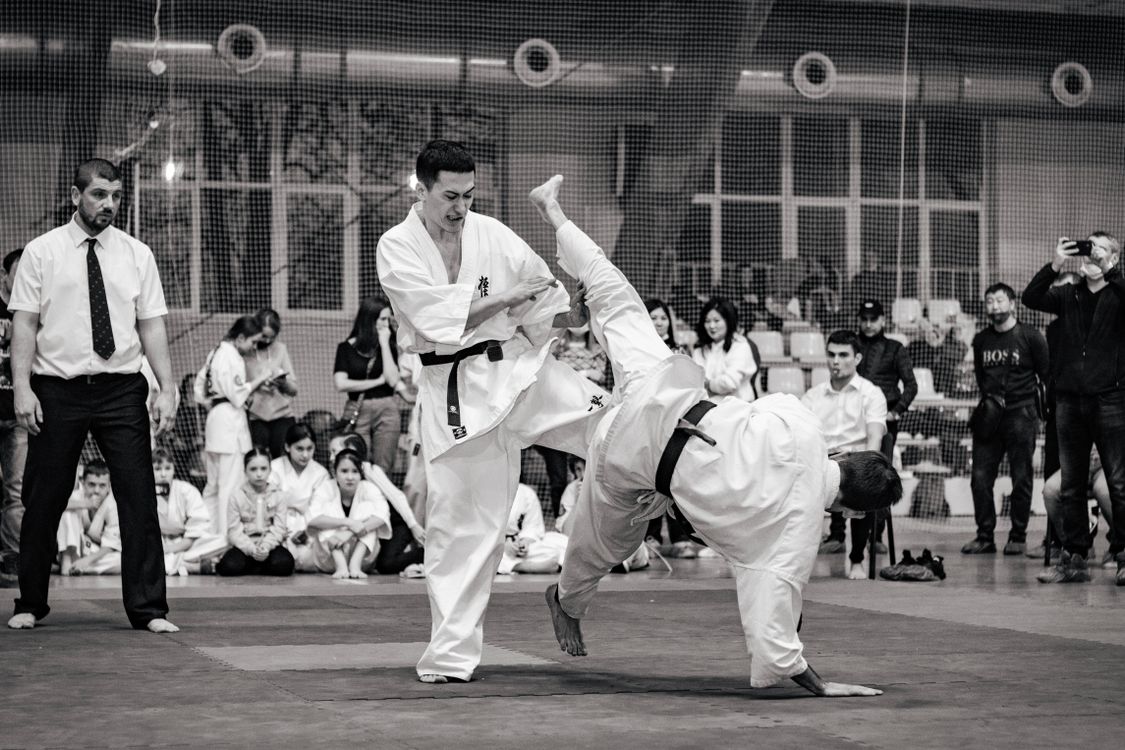
A tournament is a staffing problem wearing a martial arts costume. The limit is people, not money, and first aid should be planned for the injury rates in Step 3, not for a normal class. Name every helper before you publish the schedule. A tournament without enough referees does not run late, it stops.
A camp needs much stronger supervision than a one-day event, because children staying away from home overnight is a different situation from children in a hall for six hours. Cancellation terms matter more too: each person pays more, and a place given up three days before cannot be resold.
Common Mistakes to Avoid
1. Starting too late. Two months is not enough for a seminar with a visiting teacher. By then the good weekends are gone, travel has become expensive, and there is too little time to spread the word. Agree the date six months ahead, announce it the same week, and start up to a year ahead for a teacher from Japan.
2. Setting the ticket price by looking at what other schools charge. Other schools have a different hall at a different price and a different number of students. Their price tells you nothing about how many tickets you need to sell. Add up your costs first, divide by a realistic number of people, and only then check what others charge.
3. Treating the visiting instructor's fee as the whole cost. The fee and travel are the numbers people remember, and in the example above they took a third of the ticket. The hall, insurance and card fees took about the same again. Many seminars that "covered the fee" actually lost money.
4. Opening bookings before the refund policy exists. The policy is easy to write in advance and impossible to write fairly once someone has asked for their money back. Write it, show it before people pay, and stick to it.
5. Booking the hall for the training hours only. The seminar runs 10:00 to 16:00, so you book 10:00 to 16:00, and then you are laying mats at 09:55 with students arriving and stacking them at 16:05 with a caretaker waiting to lock up. Book time to set up and pack away, plus some extra at the end, because events run over and halls rarely let you stay longer.
6. Keeping the attendance list on paper and never copying it over. The clipboard goes in the bag, the bag goes in the car, and six weeks later nobody knows who came. You lose the sign of who is committed, the evidence for gradings, and the follow-up list, which together were most of the event's long-term value.
From my own dojo: for the first two years of running my 40-student Aikido school I organised seminars out of a spreadsheet and a group chat. The spreadsheet was not really the problem. The problem was that the seminar existed in a different system from everything else I ran, so the day after it finished, it stopped existing at all. I knew roughly what came in, not what it cost, and I could not have told you six months later which of my students had actually been on the mat that Saturday. The training was good every time. The learning was thrown away every time. Recording the event against the same member records as an ordinary Tuesday class is the change that made the second year better than the first.
Frequently Asked Questions
How far in advance should you plan a martial arts seminar?
Start about six months ahead, and never less than three months. Experienced teachers are booked up far in advance, so agree the date with the teacher first, on a weekend with no big events in your city. In the same week, confirm the venue, set the ticket price, open bookings and announce the event. Book the teacher's travel about three months out, once early bookings have brought in the money and before prices rise. If you are inviting a teacher from Japan or from the head dojo of your style, you may need to send a formal request to the head dojo up to a year in advance.
Do you need separate insurance for a martial arts event?
Usually yes, if people who are not your members will be on the mat or in the building. Normal club insurance covers your members, at your usual hall, at your usual times, and an event usually changes at least one of those. Ask your insurer directly about visitors and spectators. As an example, BMABA in the UK charges £2.50 for each visiting participant who is not a member, with a £25 minimum, while a US one-day event policy costs roughly $150 to $450 for an event of about 500 people, according to a specialist broker.
Can EU students cancel a seminar ticket under the 14-day cooling-off rule?
No, not as a general right. EU consumer law gives people 14 days to cancel most online purchases, but it makes an exception for leisure activities booked for a specific date (EU Consumer Rights Directive, Article 16(l)). The EU's highest court confirmed in 2022 that this also covers tickets sold through a ticket agency (Case C-96/21). So your own published refund policy is what counts, which is why you need to publish one before you sell the first ticket.
Should a dojo charge for a seminar or run it free?
Charge, unless the goal is to attract new students. Payment is what makes people who sign up actually come: across more than 860 events on one event platform, about 28% of people who registered for free events did not turn up, against about 17% for paid events. That is general event data, not martial arts data. For an open day meant to bring new people through the door, free is the right choice, and you should invite more people than you have room for.
What does it cost to run a one-day martial arts seminar?
The three costs you can know in advance are the hall, the insurance and, if you take cards, the card fees. A city-run gym in the US typically costs $60 to $110 an hour, and more if you charge for entry. In Germany, registered local clubs pay little or nothing for a council hall, while private and commercial users pay around €70 an hour. A UK council sports hall costs about £35 to £80 an hour. Add one-day event insurance, and card fees of about 3% plus $0.30 per ticket in the US or 1.5% plus €0.25 in Europe. In our worked example of 40 people paying $60 each in the US, with the hall at $84 an hour, those three costs plus an assumed $800 instructor fee left the school about $19 per ticket.
An event is only worth the trouble if it feeds back into the school. The attendance record tells you who is committed, the grading result belongs in a student's history, and the follow-up is what turns a good Saturday into a student who is still training in March, which is the argument running through the complete guide to student retention.
DojoMaster handles events alongside classes rather than separately: seminars, examinations, workshops, courses and social events, each as its own category, over one day or several, with a venue and address, an optional limit on places, teachers chosen from your own members or added as guest teachers, named ticket types with prices (you collect the money through your own payment provider), and a list of who registered and who attended. Start free at dojomaster.app for up to 20 students, with paid plans from EUR 24/month.
Written by Daniil Pavliuchkov, 4th dan Aikido Aikikai and founder of DojoMaster.