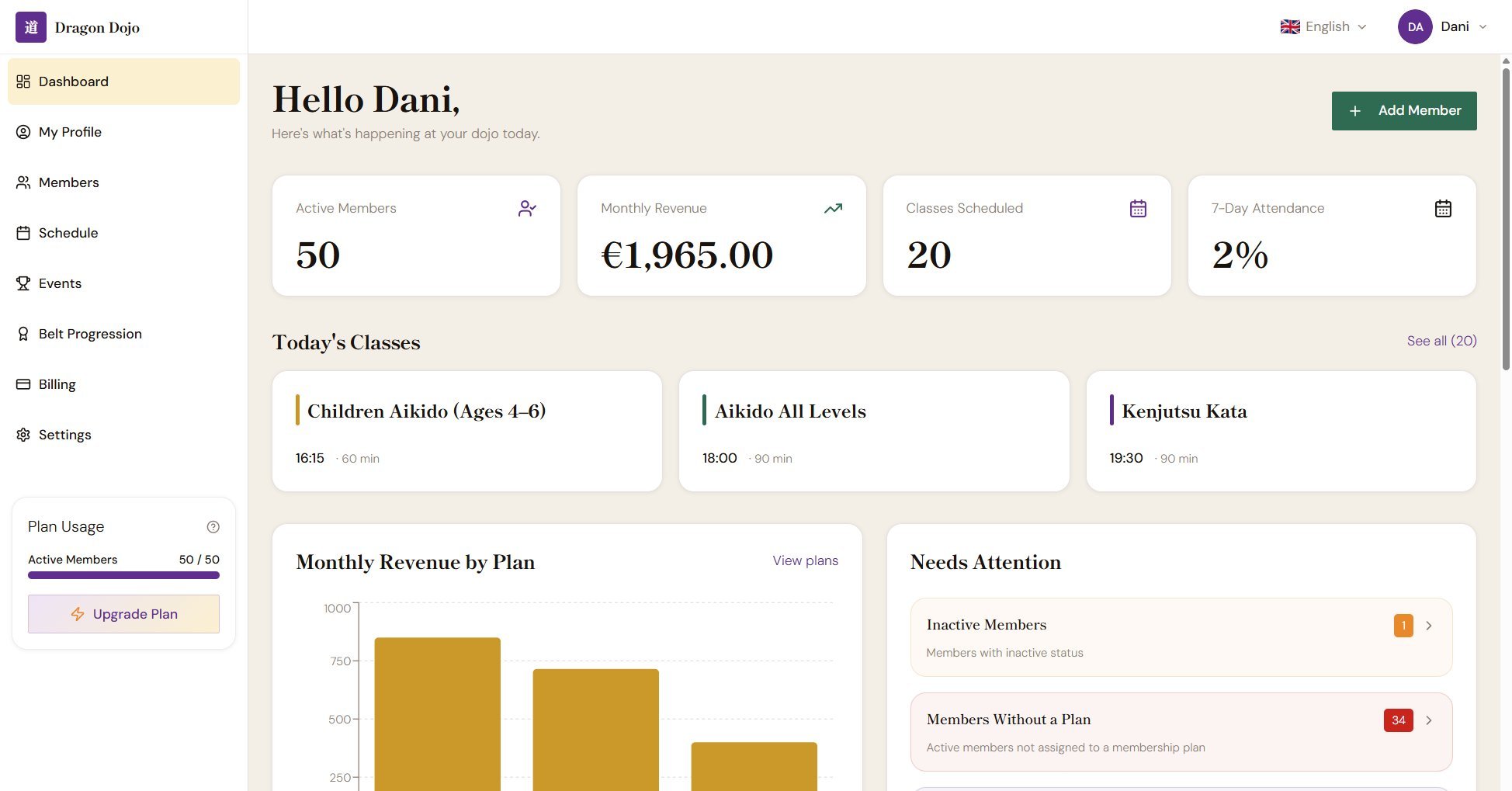
Recording who came to class costs about $20 if you buy a pack of cards and a rack to hang them in. Software for the same job runs from nothing to $199 a month for a base plan. The gap is not really about recording attendance, because every option below does that. What you pay for is the arithmetic afterwards: which students have done enough classes to be graded, and which ones have quietly stopped turning up.
That second question is the one that costs money, and it is the one paper cannot answer without someone sitting down with a calculator.
I compared the ten products a martial arts school would realistically consider, using each vendor's own pricing and feature pages on 17 October 2026. Prices below are their published figures on that date.
Key Takeaways
- Paper attendance cards cost about $20 and still work. A pack of 100 record cards is $5.99 and a wall rack is about $9 to $24. What cards cannot do is add up a student's classes since their last grading.
- Only three of the ten state that they count classes toward the next belt: Spark Membership, Martialytics and DojoMaster. For the other seven, that arithmetic is still yours to do.
- For a 50-student school the published prices run from $0 to $199 a month for a base plan. Recess charges the school nothing and takes about 5% from the member at checkout; Spark Membership is $199 flat; half the field sits between $50 and $100.
- Only one of the ten, DojoMaster, advertises SEPA Direct Debit. None of the others mentions SEPA or euro pricing on its own pricing or payments pages, which matters if your students bank in Germany, Austria or the Netherlands.
- Do not buy check-in that only works through a phone app. Most children under ten have no smartphone of their own (KIM-Studie 2024; Common Sense Media, 2025), and children's classes are far more popular than classes for older adults. Among over-65s, about 22% have no smartphone either (Pew Research Center, 2025).
If you are still working out how the business side of a school fits together, the complete guide to dojo management covers where attendance sits alongside billing, scheduling and grading. If your question is really which method to use rather than which product to buy, manual versus automated attendance tracking compares the seven methods side by side. This article is about the products.
The Ten Options at a Glance
Prices are per month for a school with 50 active students, taken on 17 October 2026 from each vendor's own pricing page: Martialytics, Kicksite, Gymdesk, Zen Planner, Spark Membership, DojoTrack, Clubworx, WodGuru, Recess and DojoMaster. DojoMaster is our own product.
Colour in that table is a reading aid rather than a verdict: red marks a missing feature, the highest price, or something the vendor does not document, and amber marks something partial or conditional. The last column carries no colour, because general gym software runs a dojo perfectly well right up to the moment you need it to count classes for a grading.
Two things the chart does not show. WodGuru's $50 does not include check-in: its kiosk and its QR reader are separate $9 add-ons, which is the only product here that charges extra for the thing this article is about. And Gymdesk's $75 assumes you also use Gymdesk for card payments; bring your own processor and it is $100. Our own dojo software pricing comparison goes through the rest of the fine print.
Software Built for Martial Arts
These six know what a belt is. That sounds like marketing until you try to make general gym software tell you who has done 40 classes since their last grading.

Martialytics
$69 a month up to 50 students, then $99 to 100, $129 to 200 and $199 above that (pricing page). Thirty-day trial, no card needed, and every plan gets every feature. Students check in through a kiosk, through an admin screen, or on their own app. Students who miss classes get an automatic message.
The part worth paying for is the grading side: Martialytics shows each student as ready, almost ready or not ready to grade, and you can group students by classes attended, by time spent at their current rank, or by both. Along with Spark and DojoMaster, it is one of only three products here that say on their own sites that they count classes toward a rank.
One caution. Martialytics bills in US dollars and its Direct Debit partnership with GoCardless covers the UK, Australia and New Zealand, with Canada and the US named as next. Europe is not mentioned.
Kicksite
$49 a month up to 25 active students, $99 to 50, $149 to 100 and $199 above that, with a 30-day free trial (pricing page). An annual discount exists but the amount is not published.
Kicksite has the most carefully built attendance log of the martial-arts-specific products. Students check in at a self-service kiosk with a PIN or a barcode, and the barcode can live on their phone rather than on a card. There is a mass check-in for a whole programme or rank, which is the realistic answer for a children's class where twenty six-year-olds are not going to queue at a tablet. The log itself splits into individual check-ins, check-ins grouped per student per rank, and a live view of who is walking in right now, and it exports to CSV with your filters intact.
What I could not find anywhere on Kicksite's site is attendance-based alerts or class counts tied to a belt requirement. The automatic alerts it documents are about expiring memberships and overdue invoices. We cover the rest of the product in DojoMaster versus Kicksite.
Spark Membership
$199 a month, flat, whatever your size, after an eight-week free trial (pricing page). That trial is by far the longest in this field, and a flat price means a 200-student school pays the same as a 40-student one, which flips the usual maths: Spark is expensive for a small dojo and cheap for a large one. The $99 first-year promotion we recorded in September 2026 is no longer on the pricing page as of 17 October 2026.
Spark is barcode-first. It prints Code 39 labels, and staff scan them or type them in. There are two kinds of label and the difference matters: membership barcodes record attendance that counts toward rank and class credits, while contact barcodes only log that the person was there. Get them mixed up and your grading records are wrong in a way you will not notice for months.
Spark is the clearest of all ten on belt requirements: you set attendance requirements for each rank and the system holds them.
DojoTrack
The free plan is the interesting part. $0 for up to 50 students with no card required and no expiry, including attendance tracking, belt tracking with your own ranks, and shift scheduling for three staff. Paid plans start at $95 for up to 100 students (pricing page).
Read the free plan's limits before you commit, though, because two of them bite a real dojo. You get 10 classes, which a school running a full weekly timetable will exceed, and 90 days of attendance history. In my experience ninety days is shorter than the gap between gradings at most schools, so the one record you most need at a belt test is the one that has already rolled off. For what a free plan can and cannot carry generally, see free versus paid dojo management software.
Kiosk, QR and barcode check-in are not documented on DojoTrack's pages, so ask how check-in actually works before you commit.
Recess
Recess charges the school nothing at all: no monthly fee, no setup fee, at any number of students or locations. Instead the member pays a service fee of about 5% at checkout, which covers card and bank processing (pricing page). Cash or a cheque that you record by hand carries no fee.
For a small school that can make it the cheapest option on this page by a wide margin. The thing to be honest about is who ends up paying: a student on a EUR 60 membership is handing over roughly EUR 3 a month for software you are getting free, and they will feel it most at the moment they pay.
Members get a branded app for booking, payments and progress, and you can stop a white belt booking into a black belt class. Kiosk and QR check-in are not mentioned on the pricing page, so ask before you assume them. Recess also publishes its own roundup of attendance software which puts Recess first, so read that one the way you would read any advertisement.
DojoMaster
EUR 24 a month, EUR 19 billed yearly, free up to 20 members with no time limit, and the interface in 16 languages (pricing page). Students check in at a kiosk by searching their name and tapping it, or by scanning a QR code shown on the kiosk screen for that specific class. Instructors are checked in automatically when the class roll is saved. How kiosk check-in actually works covers the setup in detail, including where to put the tablet.
Instructors can also check students in themselves from the app, and the list starts with the class regulars, meaning everyone who has trained in that class in the last 90 days, with the most recent at the top, so the instructor ticks off familiar names instead of scrolling through the whole school. That takes very little time, so it is easy to do on a phone just before class or straight after it.
On grading, DojoMaster counts classes and time since each student's last promotion against the requirement you set for the next belt, and marks each student as eligible now, eligible soon, or not yet. Tracking belt promotions digitally goes through how that is set up.
Two cautions. The free tier stops at 20 members where DojoTrack's runs to 50. And there is no barcode scanner support, so if your students already carry scannable cards, Gymdesk, Kicksite or Spark will suit you better.
General Gym Software That Dojos Also Use
These four are built for gyms. They are not worse software; several document themselves better than the martial arts products do. They just do not think in belts, which means the grading arithmetic lands back on you.

Gymdesk
$75 a month up to 50 members with Gymdesk Payments, $100 with your own card processor, and a 30-day trial (pricing page). Gymdesk documents check-in better than anyone else here. Front Desk Mode turns a tablet into a kiosk and students can check in five different ways: searching their name, typing a numeric code, scanning a QR code off a printed card or their phone when QR is set as the preferred code type, having a barcode scanner read a card, or tapping once in the app. You can switch name search off if you do not want your membership list readable by anyone standing at the tablet. Nothing on Gymdesk's own site describes counting classes toward a rank. We compare the rest in DojoMaster versus Gymdesk.
Zen Planner
Zen Planner is the priciest of the general products at $133 a month for 46 to 60 members on the Studio package, with a website or engagement bundle pushing that to $232 or $382 (pricing page). It publishes no free trial. Its martial arts page promises belt and stripe tracking, automatic eligibility notifications and missed-class texts, but its own pages are thin on how check-in actually happens: self check-in from the member app is the only method named. A kiosk iPad app is widely attributed to Zen Planner by third-party listing sites, and I could not confirm it on a single Zen Planner page. Ask them directly before you count on it.
Clubworx
Clubworx is priced in Australian dollars: free up to 20 members, AUD 109 a month up to 100, AUD 149 to 250, AUD 169 unlimited, with 20% off billed yearly (pricing page). The catch for a dojo is that martial arts grading events are an AUD 10 a month add-on available only on the two top plans. Its own pricing page also contradicts itself on whether the free plan includes the self check-in kiosk: the bullet list says yes, the comparison table says no.
WodGuru
WodGuru is built around CrossFit and is the one product that charges separately for check-in. The base price is $1 per active member per month with a $49 minimum and a $249 ceiling, and then the check-in kiosk is $9 a month and the QR reader is another $9 (pricing page). A free plan covers up to 10 members, which is a demo rather than a plan.
If You Only Want to Record Who Turned Up
A lot of people searching for attendance software are actually looking for attendance cards. That is a reasonable thing to want, and it is worth knowing what it costs before you spend $99 a month instead.
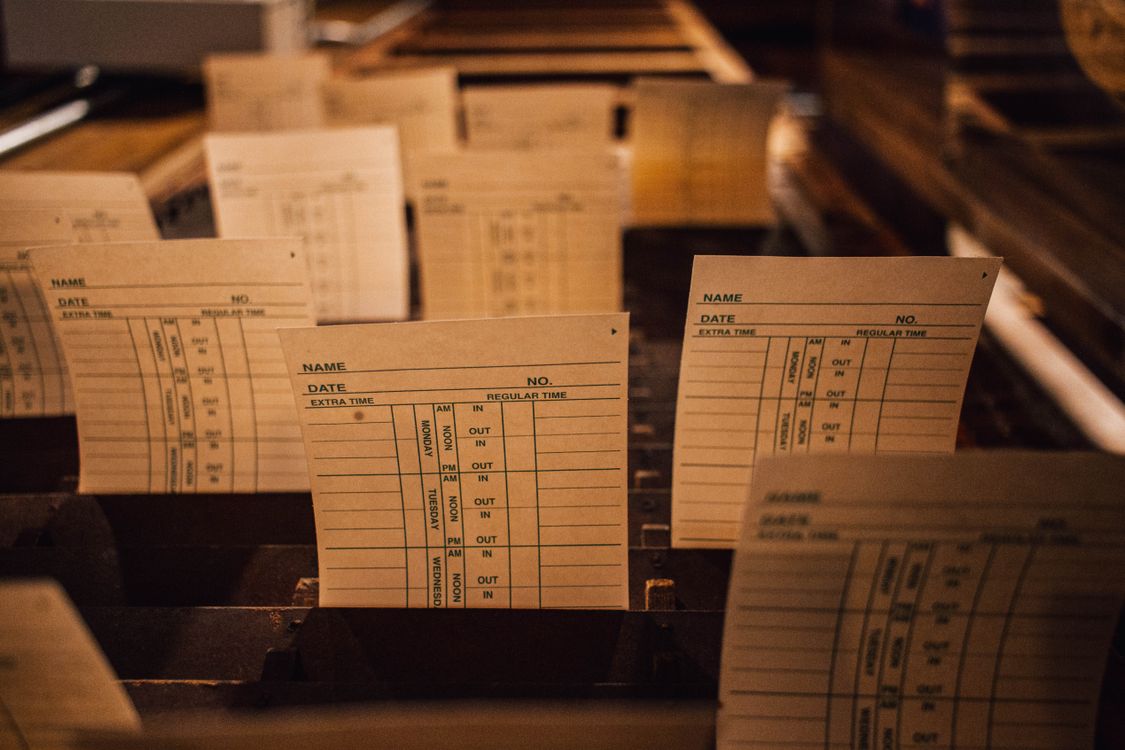
Paper cards are about $20 for the whole system. None of the big martial arts suppliers appears to sell a dedicated dojo attendance card, but the generic equivalents are everywhere and work identically: a pack of 100 attendance record cards is $5.99 (Lifeway), punch-clock time cards run $9.69 to $15.71 per 100, and a wall rack to hang them in runs from about $9 for a five-pocket acrylic one to about $24 for a ten-pocket industrial one. Those are US listings checked in October 2026. Call it $15 to $30 for a school of 60.
Students pull their own card off the wall before class and the instructor collects the stack afterwards. It is nearly free, everyone understands it on the first evening, and it does not care whether the wifi is working. The cost is that sixty students is sixty cards every night, cards go missing, latecomers get skipped, and working out whether someone has met the class requirement for their next grading is arithmetic done by a tired person at 10pm.
A spreadsheet is free and gets you most of the way. Google Sheets costs nothing on a personal account, sorts, filters and adds up, and can answer the belt question with a formula. It is the right answer for a lot of small schools and it is how I ran mine. The point at which it stops being the right answer is covered in seven signs your dojo has outgrown a spreadsheet.
A generic QR check-in tool logs entry and nothing else. OneTap is free for up to 20 people and $49.99 a month for 250, billed annually only, with an iPad kiosk, a web kiosk, shareable QR passes and even check-in by text message for people with no app. It will tell you who walked in. It has no concept of a belt, a stripe or a class credit, so you will be copying its exports into a spreadsheet to answer the only question you actually had. Teamup, which also turns up in these searches, is a shared calendar with event sign-ups and does not track attendance at all.
Five Things to Check Before You Pay for Anything
Do not buy check-in that only runs through a phone app. Children are the biggest group it leaves out, and children's classes are far more popular in most dojos than classes for older adults. In Germany, 11% of children aged 6 to 7 have a smartphone of their own, rising to 33% at 8 to 9 and 63% at 10 to 11 (KIM-Studie 2024, a survey of 1,225 children and their parents). In the US, nearly one in four children has a phone of their own by age 8 (Common Sense Media, February 2025). Older adults are the second gap: smartphone ownership is 97% at ages 18 to 29 and 96% at 30 to 49, but 90% at 50 to 64 and 78% at 65 and over (Pew Research Center, November 2025, a survey of 5,022 US adults). A kiosk where someone can tap their own name, or a card they can hold, is not a nostalgic extra.
Check whether it counts classes toward the next belt, in writing. This is the single feature that separates attendance software from an attendance log, and only three of the ten state it plainly on their own sites: Spark Membership, Martialytics and DojoMaster. Do not accept "belt tracking" as an answer: recording that someone passed a grading is not the same as counting the classes that qualify them for the next one. Ask for a screenshot.
Read the free plan's limits, not its headline. DojoTrack's free plan sounds generous at 50 students until you notice the 90-day cap on attendance history, which in my experience is shorter than the gap between gradings at most schools. A free plan that forgets the records you need at a belt test is not free, it is a trial with extra steps.
If you are in Europe, check the currency and the payment method before anything else. Four of these ten print a dollar sign and never say which dollar. Clubworx is in Australian dollars. More importantly, DojoMaster is the only one of the ten that mentions SEPA Direct Debit or euro pricing on its own pricing or payments pages. Martialytics is explicit that its Direct Debit coverage is the UK, Australia and New Zealand. Clubworx maps Direct Debit to the UK only and routes everything else to card payments. Gymdesk integrates GoCardless, which does run SEPA in 21 European countries, but Gymdesk itself never says so, so ask before you assume it. A $99 plan is not a EUR 99 plan, and if you cannot collect by SEPA Direct Debit you will be putting every student on a card instead, which costs more and fails more often.
Ask what happens when the internet drops. Not one of the ten products here advertises an offline mode. That is a true and slightly alarming finding about this whole category. If your dojo has unreliable wifi, the honest fallback is a paper list for that evening, so make sure whoever is teaching knows that and has one in a drawer.
Attendance Records Are Personal Data
This one matters most to European readers. An attendance history is personal data under the GDPR, and regulators have treated it as such. In February 2023 the Norwegian data protection authority fined the Nordic fitness chain SATS about EUR 900,000, reported elsewhere as NOK 10 million, after finding among other things that it had no valid legal basis for processing members' training history. Consent did not work because it had been bundled into acceptance of the general terms, so it was not freely given, and the processing was not necessary to deliver the service for members who only used the basic facilities (GDPR Enforcement Tracker, decision of 6 February 2023; analysis by BDK Advokati, May 2023). The practical lesson is that you need to be able to say why you keep the record, and "because the software does" is not a reason.
Never make a fingerprint or a face scan the only way to check in. The Spanish authority fined a Santander gym EUR 27,000 after it made a fingerprint the single method of entry and cancelled the membership of a member who refused, without offering any alternative, and consent is not valid where there is no free alternative (reported by finreg360 and Genbeta, citing AEPD procedure PS/00413/2022). A Spanish court has at least once disagreed on whether a particular gym's system was proportionate, so this is not settled law, but the safe build is obvious: always offer a PIN or a card alongside anything biometric. I did not find fingerprint check-in on any of the ten pricing or feature pages I read, so for most dojos this is a door-lock question rather than a check-in one, and our guide to kiosk check-in covers the rest of the data-protection side.
There is no legal retention period for attendance records. I went looking for one and it does not exist. What the rules require is that you set a period yourself, justify it against the reason you collect the records in the first place, and tell members what it is. The published policies I could find range from one year after a member leaves to three, which tells you these are company choices rather than requirements. For a dojo, the honest justification is usually grading: you need the classes since the last promotion, plus a margin.
Related, and easy to get wrong in the same week: decide which of your instructors can see what. Attendance is not the same as payment data, and role-based access for dojo staff covers where to draw that line.
What the Data Is Actually For
None of this is worth $99 a month if the record just sits there.
The reason to collect attendance is that it tells you who is about to leave, weeks before they say anything. A 2025 study of a large Turkish gym chain found that about half of members were no longer maintaining any attendance streak by week six, and 80% by week seventeen (Demirci et al., a 2025 paper that has not been through peer review). It is a commercial gym chain rather than a dojo, which is the closest comparison this subject has, and the authors defined the streak measure themselves. What to take from it is where to look rather than a number to copy across: the first weeks are when people slip away quietly, and nobody announces it. For the measure itself, compare each student against their own timetable, because somebody on a once-a-week beginners' course is not falling behind by coming once a week. The 90-day dropout window covers what to do with the names that come up.
There is a more encouraging finding alongside it. In a 2014 study of 10,000 UK members, people who went to scheduled group sessions kept their membership at 88% against 82% for those who only used the gym floor (The Retention People, via Health & Fitness Association). People who pick classes may well be the committed ones to begin with, so read that as a hint rather than proof, but every class you teach is a scheduled session. Our guide to student retention covers what to do with the names an attendance list gives you, and the seven numbers worth tracking monthly covers what a normal attendance rate looks like.
From my own dojo: I ran a 40-student Aikido school on a Google Sheet and invoiced through Stripe, and I had an attendance column I filled in most weeks. What I never did was read it. It was a record, not a report, and nobody ever opened it between one grading and the next. The first time I actually sorted that sheet by classes attended I found three people who had not been on the mat in five weeks, and I had seen all three of them in my head as current students. Two of them came back after a message. Whatever you buy from the list above, the question to ask is not whether it records attendance, because they all do. It is whether it will put the people who have stopped coming in front of you without you having to go looking.
Frequently Asked Questions
What is the best attendance software for a martial arts school?
There is no single best one, but the field splits cleanly. If counting classes toward the next belt matters to you, only three state on their own sites that they do it: Spark Membership at $199 a month flat, Martialytics from $69 a month and DojoMaster at EUR 24 a month. If you want the most flexible check-in, Gymdesk offers five methods including QR and barcode scanning from $75 a month. If price is what decides it, Recess charges the school nothing and takes about 5% from the member instead, and DojoTrack has a free plan for up to 50 students with a 90-day cap on attendance history.
Do martial arts attendance cards still work?
Yes, and they cost about $20 for a whole school. A pack of 100 attendance record cards is $5.99 and a wall rack to hang them in runs from about $9 to about $24 on US listings checked in October 2026, so a 60-student system is $15 to $30 all in. Students pull their own card before class and the instructor collects the stack afterwards. The limits are the ones you would expect: cards go missing, latecomers get skipped, and adding up a student's classes since their last grading is arithmetic somebody has to do by hand. None of the main martial arts suppliers appears to sell a dedicated dojo card, so the generic office and church-supply versions are what people actually buy.
Is there a free martial arts attendance app?
There are several, with different catches. DojoTrack is free for up to 50 students but caps you at 10 classes and 90 days of attendance history. Clubworx and DojoMaster are both free up to 20 members. WodGuru is free up to 10, which is really a demonstration. Recess is permanently free to the school and charges the member about 5% at checkout instead. OneTap is free for up to 20 people if all you want is a QR check-in with no belt or grading features at all. Read the caps before you commit: a history limit shorter than the gap between your gradings makes the free plan useless at exactly the moment you need it.
Can students check in with a QR code?
Some products support it and some do not, and it is worth asking rather than assuming. Gymdesk reads a QR code off a printed membership card or a phone through the tablet's camera. DojoMaster shows a QR code on the kiosk screen for the specific class. WodGuru sells a QR reader as a $9 a month add-on. Kicksite uses barcodes rather than QR codes for check-in, including a barcode shown on the student's phone, and its QR codes are for sign-up links instead. Martialytics also uses QR for sign-up rather than attendance. Whatever you choose, keep a method that works without a phone, because most children under ten have no smartphone of their own, and nor do about 22% of people over 65.
How long can a dojo keep attendance records under GDPR?
There is no fixed legal period. The rules require you to decide a retention period yourself, justify it against the reason you collect the records, and tell members what it is. For a dojo the usual justification is grading, so a period that covers the classes since a student's last promotion plus a margin is defensible. The published policies I could find range from one year after a member leaves to three, which shows these are company decisions rather than legal requirements. The Norwegian authority's 2023 decision against the fitness chain SATS turned partly on a club being unable to show a valid basis for processing training history at all, so the record of your reasoning matters as much as the period you pick.
DojoMaster records attendance at a kiosk, counts each student's classes against the requirement for their next belt, and collects monthly fees by SEPA Direct Debit, in 16 languages. Start free at dojomaster.app for up to 20 members, with paid plans from EUR 24/month.
Written by Daniil Pavliuchkov, 4th dan Aikido Aikikai and founder of DojoMaster.
Sources: vendor pricing and feature pages retrieved 17 October 2026 (Martialytics, Kicksite, Gymdesk, Zen Planner, Spark Membership, DojoTrack, Clubworx, WodGuru, Recess, DojoMaster, OneTap); mpfs, KIM-Studie 2024 (2025); Common Sense Media, The 2025 Common Sense Census: Media Use by Kids Zero to Eight (26 February 2025); Pew Research Center Mobile Fact Sheet (20 November 2025); Demirci et al., From Occasional to Steady, arXiv:2501.01779 (2025); Health & Fitness Association, 5 Reasons Health Club Members Quit; GDPR Enforcement Tracker ETid-1656 and BDK Advokati on the Norwegian SATS decision; finreg360 and Genbeta on AEPD procedure PS/00413/2022.